






CI Flexo Printing Machine vs Gravure Press: Choosing the Right Printing Solution for Flexible Packaging
Flexible packaging manufacturers are facing increasingly complex production requirements. Customers expect attractive graphics, accurate colors, consistent quality, shorter delivery times, and more environmentally responsible production. At the same time, converters need to control production costs and remain flexible when handling different orders and packaging materials.
For many years, gravure printing has been widely used for high-quality flexible packaging. However, the development of modern CI Flexo Printing Machines has provided packaging manufacturers with another highly competitive option. Advanced central impression flexographic presses can now deliver excellent print quality while offering advantages in production flexibility, changeover efficiency, and material waste reduction.
So, when comparing a CI Flexo Printing Machine vs Gravure Press, which technology is the better choice?
The answer depends on the customer’s products, order structure, printing requirements, materials, production volume, and long-term investment strategy. This article compares the two technologies and explains how manufacturers can select the right printing solution for modern flexible packaging production.
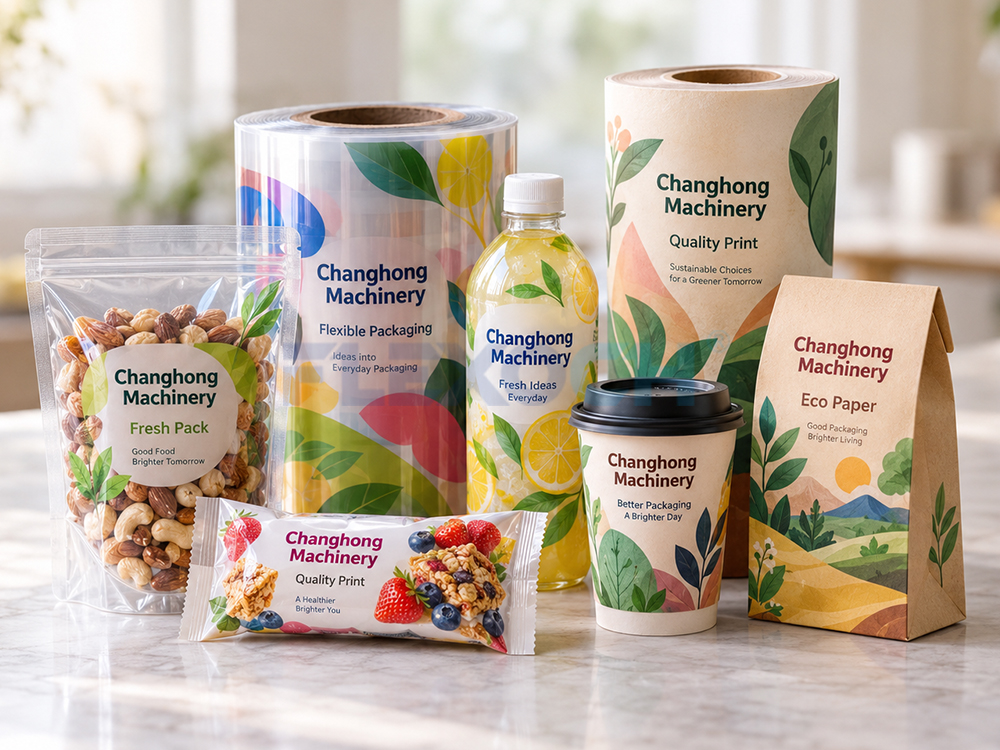
Table of Contents
ToggleWhat Is a CI Flexo Printing Machine?
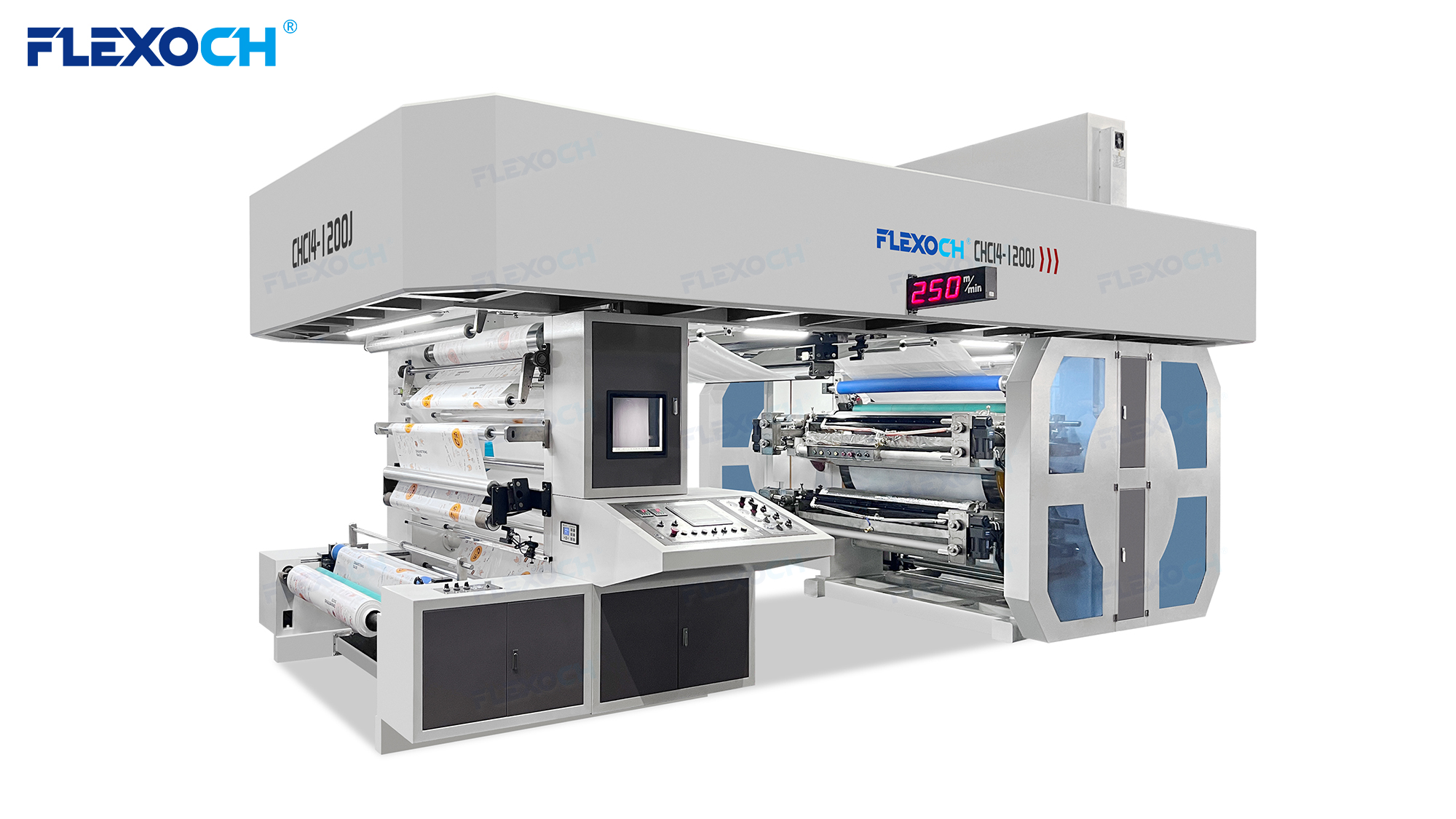
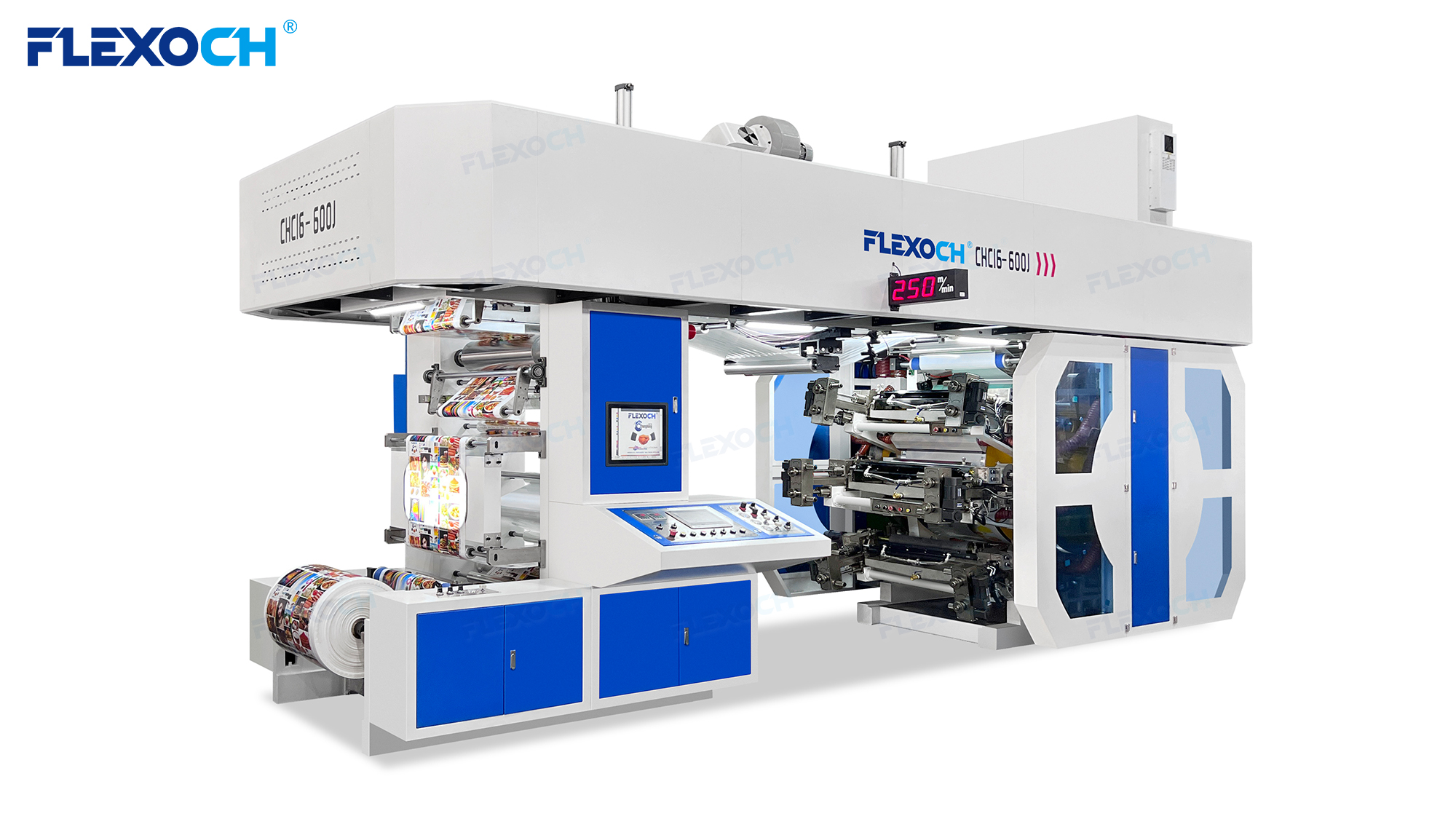
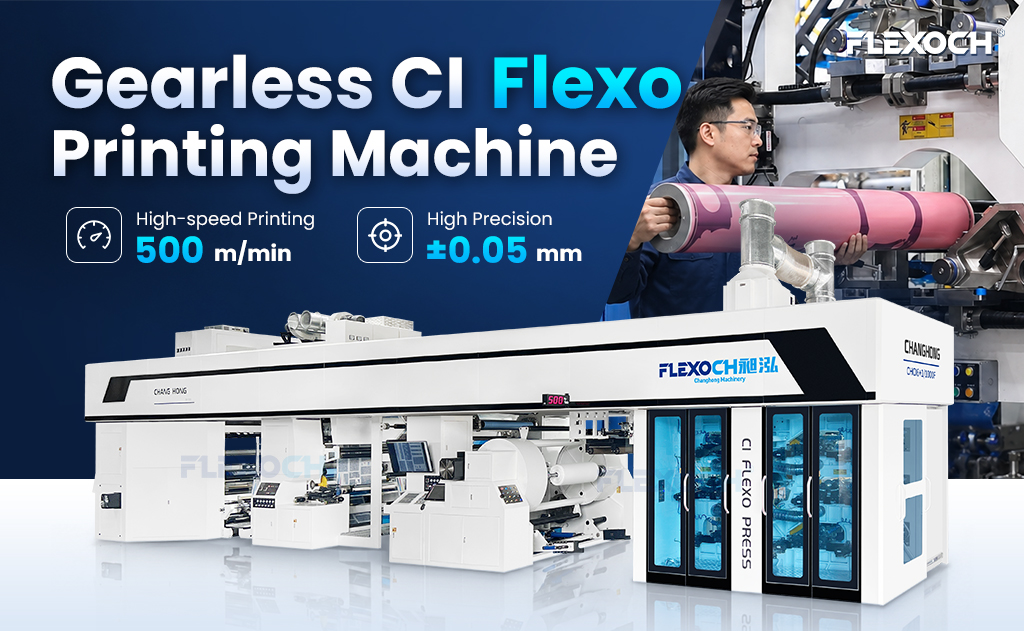
A CI Flexo Printing Machine, also known as a Central Impression Flexo Printing Machine, is a flexographic printing press in which multiple printing units are arranged around a large central impression cylinder.
During printing, the substrate is held against the central impression cylinder as it passes through each printing unit. This structure provides stable substrate support and helps maintain accurate registration between different colors.
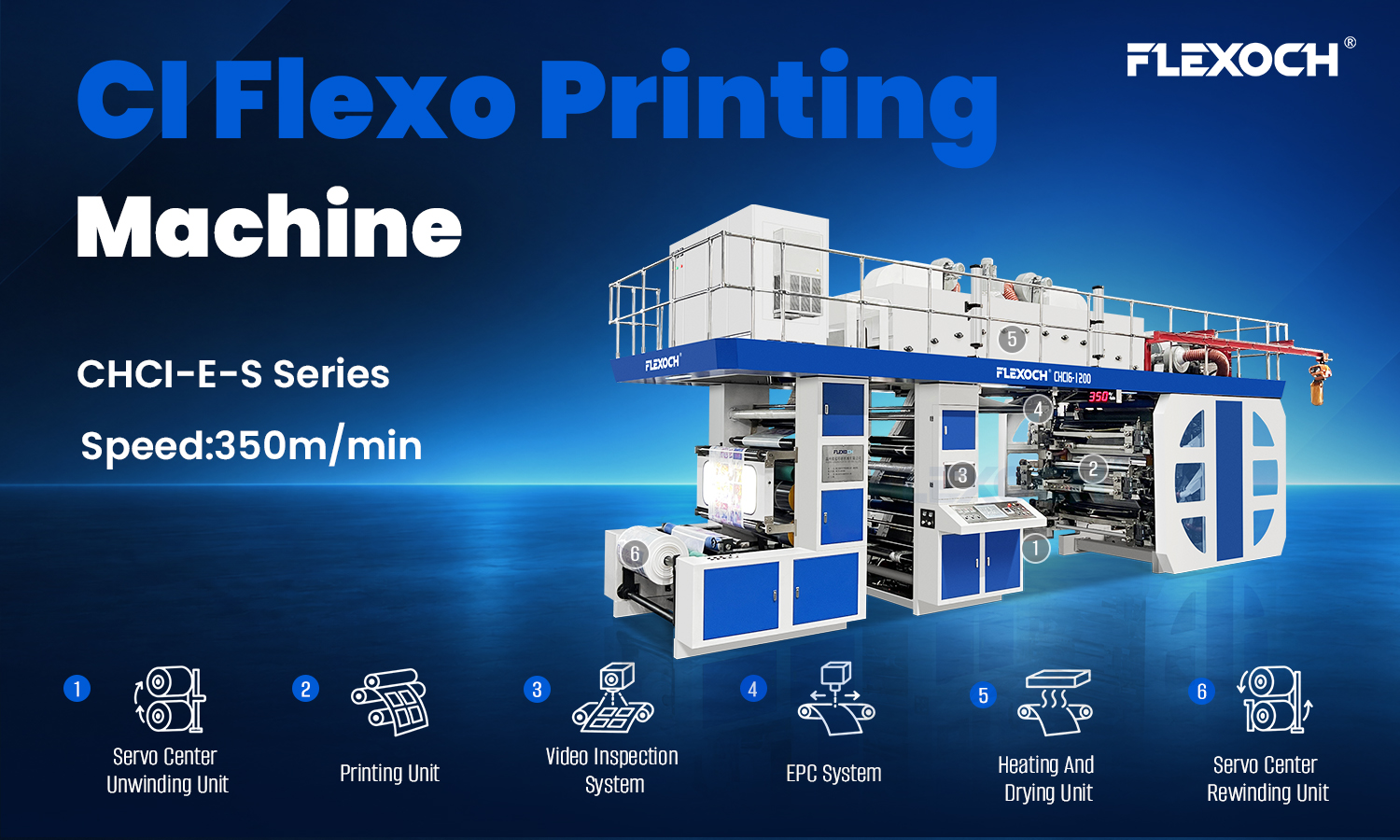
Modern CI flexo presses can incorporate advanced technologies such as:
- Servo motor drive systems
- Automatic registration control
- Automatic tension control
- High-precision anilox rollers
- Pneumatic or automatic impression adjustment
- Digital operation interfaces
- Automatic cleaning and setup functions
These technologies allow modern CI flexographic presses to achieve high-quality printing at production speeds suitable for demanding packaging applications.
FLEXOCH develops CI Flexo Printing Machines for flexible packaging manufacturers that require a combination of printing quality, production efficiency, and operational flexibility.
What Is a Gravure Press?
Gravure printing is an intaglio printing process in which the image is engraved or etched into printing cylinders. Ink fills the recessed cells on the cylinder, while excess ink is removed from the surface before the image is transferred to the substrate.
Gravure printing has traditionally been associated with high-volume packaging production because of its ability to produce stable and detailed images over long production runs.
Gravure presses are commonly used for applications such as:
- Flexible food packaging
- Beverage packaging
- Snack packaging
- Consumer product packaging
- Decorative printing
- High-volume film printing
One of the main characteristics of gravure printing is its use of dedicated engraved cylinders. This can provide excellent image reproduction, but cylinder preparation and storage also influence the overall production economics.
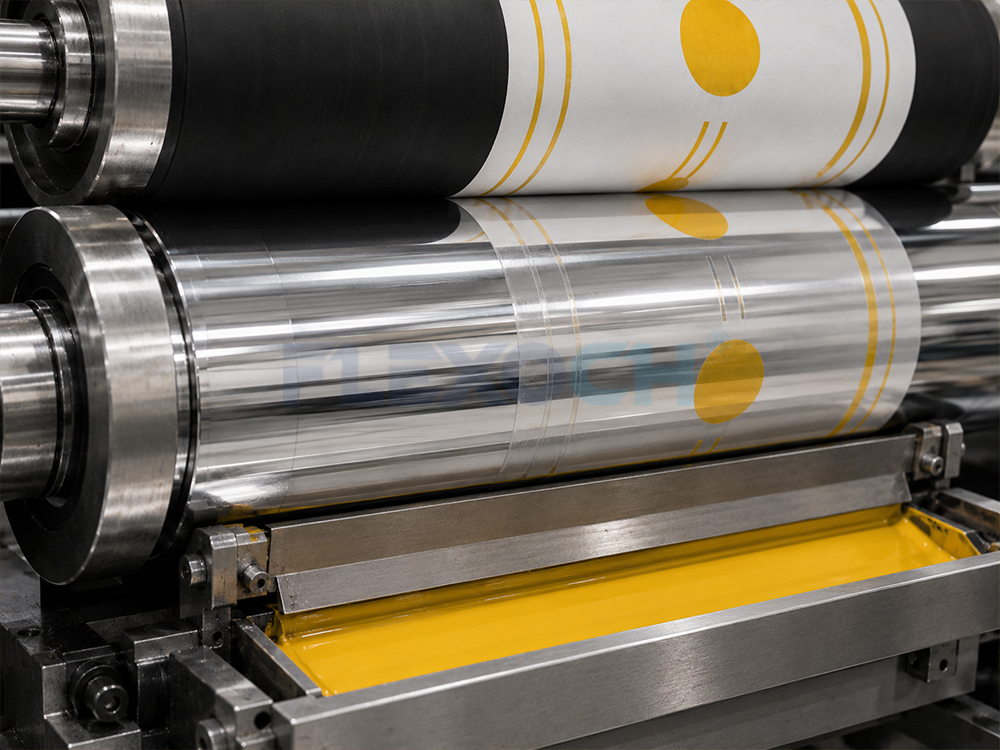
CI Flexo vs Gravure: A Direct Comparison
When selecting a printing machine, it is important to look beyond maximum printing speed or theoretical print quality. The actual value of a press depends on total production efficiency.
The following factors are particularly important when comparing CI flexo and gravure.
Factor | Gravure Press | |
Printing method | Relief flexographic printing | Intaglio printing |
Printing cylinders/plates | Flexographic plates | Engraved cylinders |
Short and medium runs | Highly flexible | Less economical in some cases |
Long production runs | Excellent | Excellent |
Changeover | Generally fast | Can require more preparation |
Plate/cylinder preparation | Flexible plate production | Engraved cylinder required |
Substrate flexibility | Wide range | Wide range |
Registration control | Advanced electronic systems | Highly stable |
Automation | Highly adaptable | Highly automated options available |
Production flexibility | High | High for long runs |
Waste reduction | Strong potential with fast setup | Strong during stable long runs |
The best choice therefore depends on the production model rather than simply declaring one technology superior.
1. Printing Quality
Printing quality is one of the first considerations for flexible packaging manufacturers.
Gravure has a long-standing reputation for excellent image reproduction, especially for detailed photographic images and large-volume commercial packaging. Its engraved cylinder technology can provide consistent ink transfer throughout long production runs.
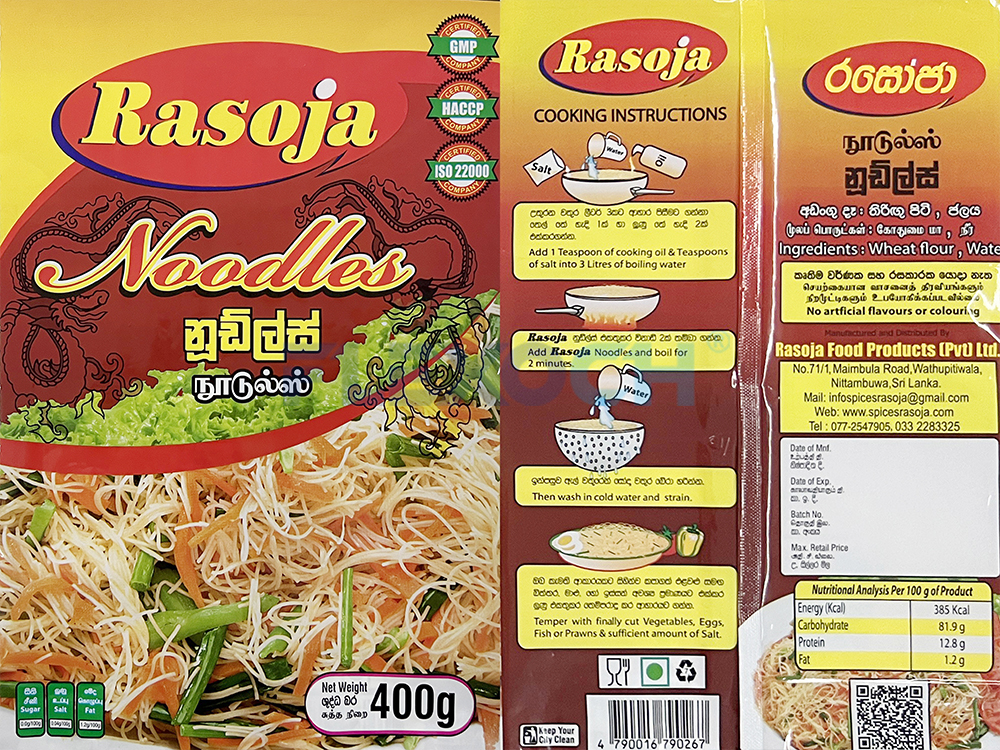
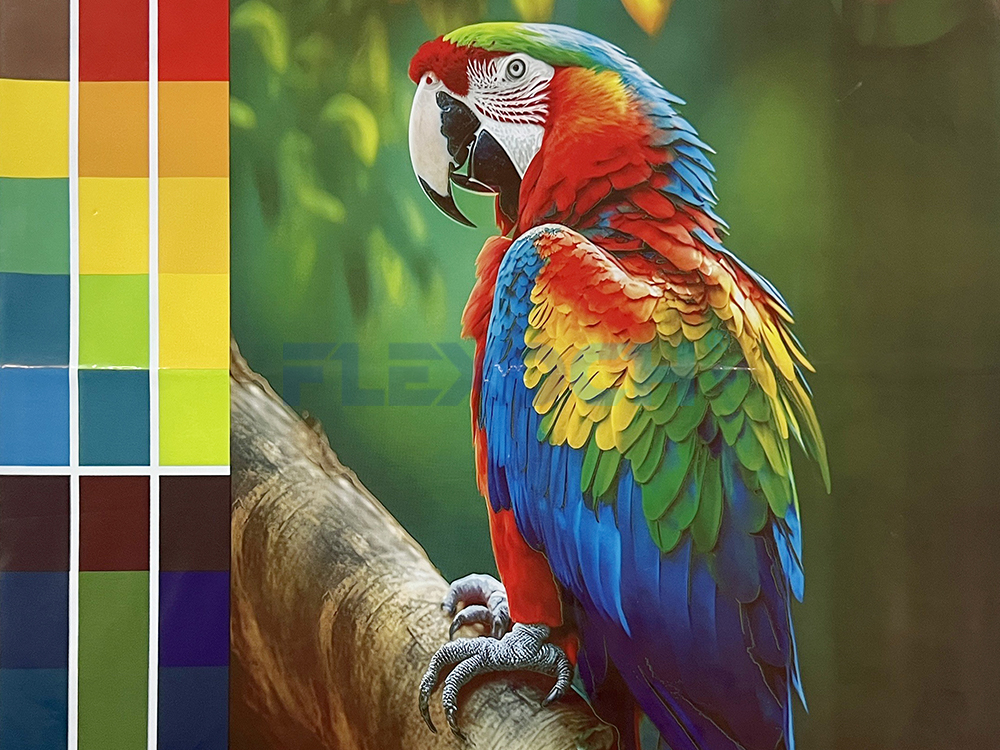
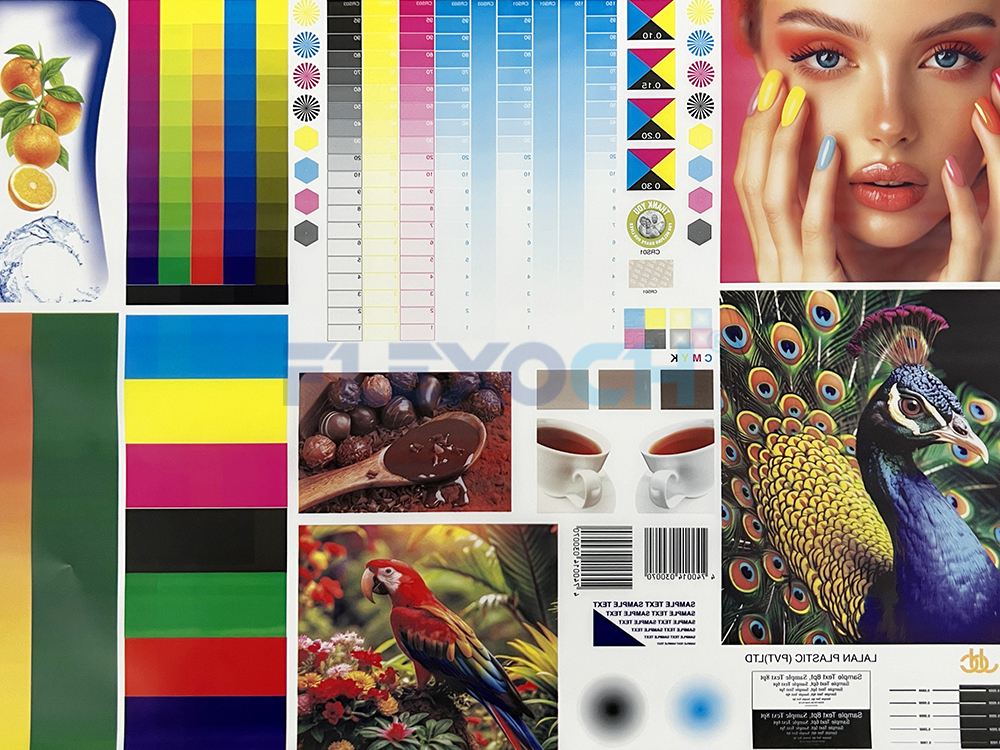
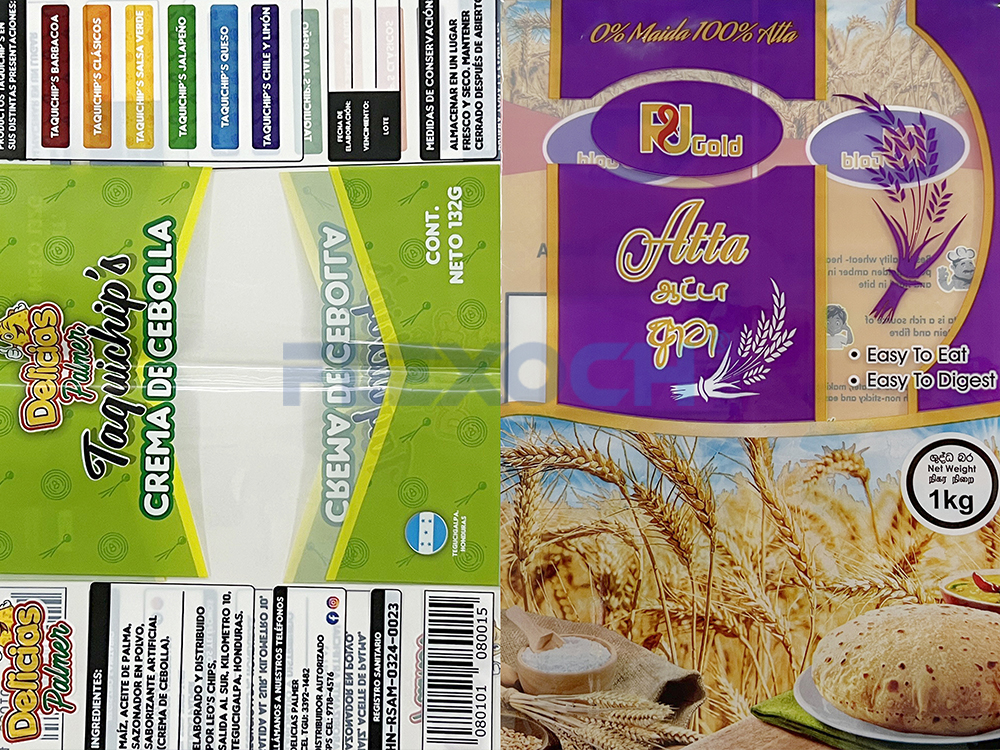
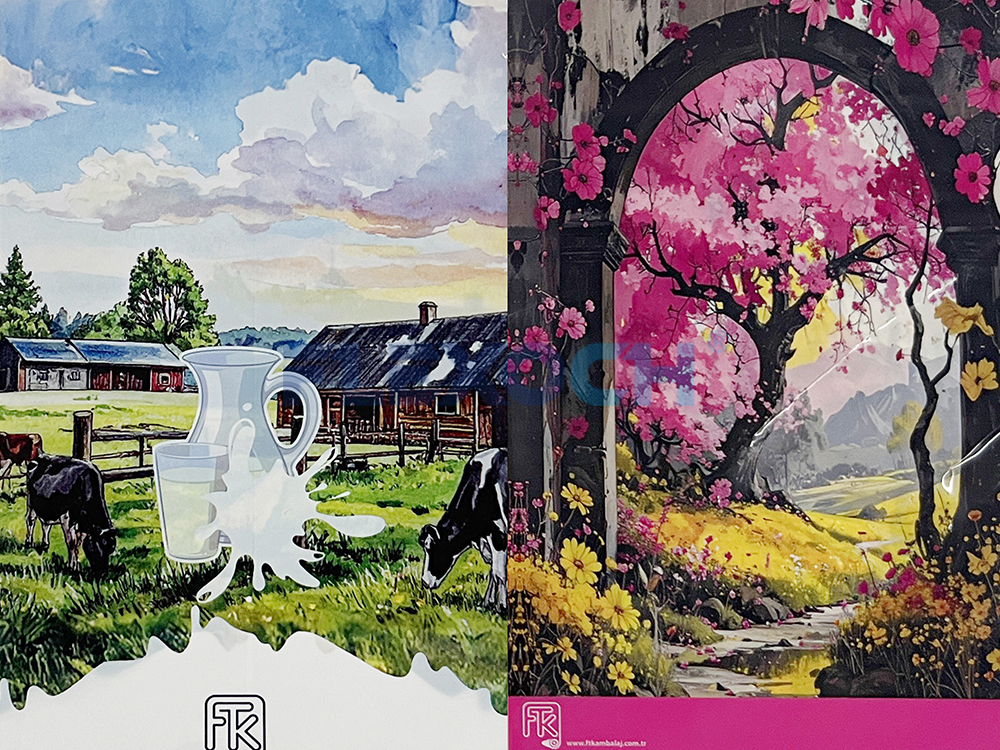
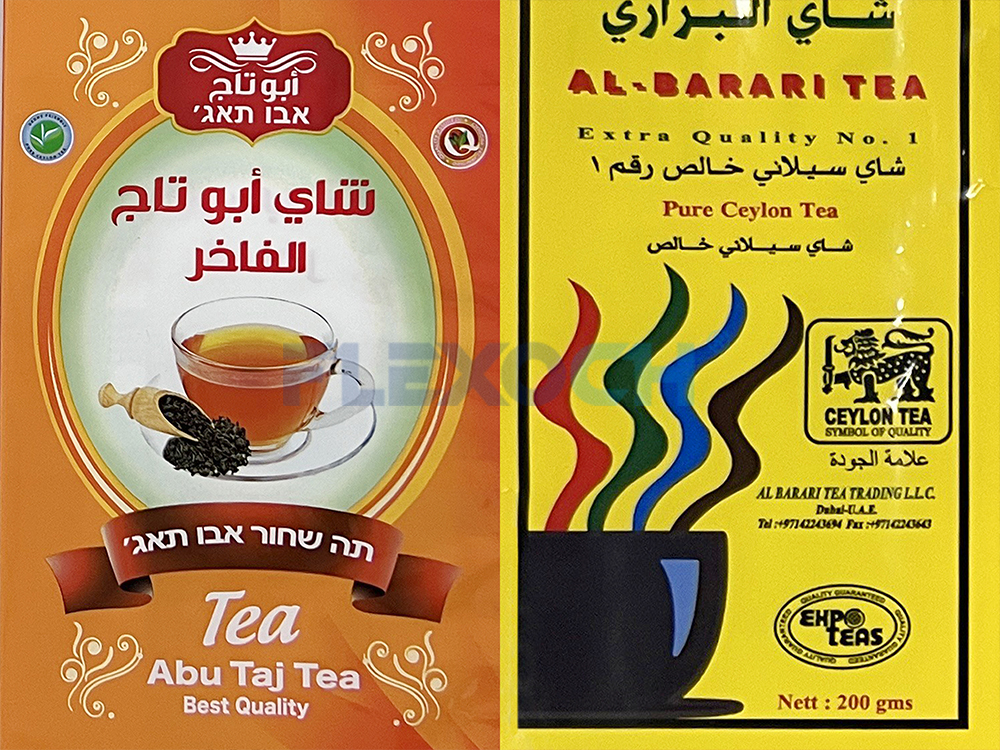
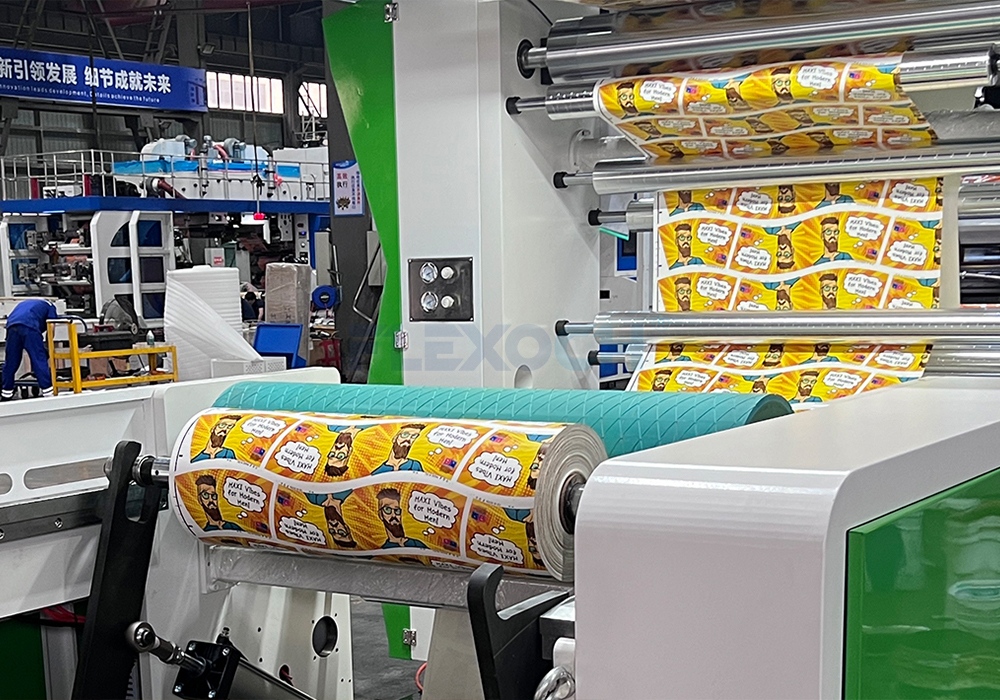
Modern CI flexo technology, however, has made significant progress in print quality. High-quality photopolymer plates, advanced anilox technology, optimized plate mounting, and precise servo control allow CI flexo presses to produce sharp text, detailed graphics, and accurate color registration.
For many modern packaging applications, the quality gap between advanced flexographic printing and gravure printing has become much smaller.
This is particularly important for converters producing packaging with multiple colors, fine text, brand graphics, and high-resolution product images.
Flexo Printing Sample
2. Printing Plate and Cylinder Costs
The cost structure of printing preparation is another major difference.
Flexographic printing generally uses flexible printing plates. Depending on the printing design and plate technology, new plates can be produced relatively quickly for new jobs.
Gravure printing uses engraved cylinders. Producing cylinders requires specialized preparation and engraving processes, which can increase the initial cost of a new printing job.
For customers with frequent artwork changes or many SKUs, this difference can have a significant impact on total production costs.
A CI Flexo Printing Machine can therefore be particularly attractive for converters handling a large number of different packaging designs.
3. Changeover Efficiency
Production flexibility has become increasingly important in the packaging industry.
A packaging converter may need to produce several different designs in a single working day. If every job requires extensive preparation, machine downtime can reduce overall productivity.
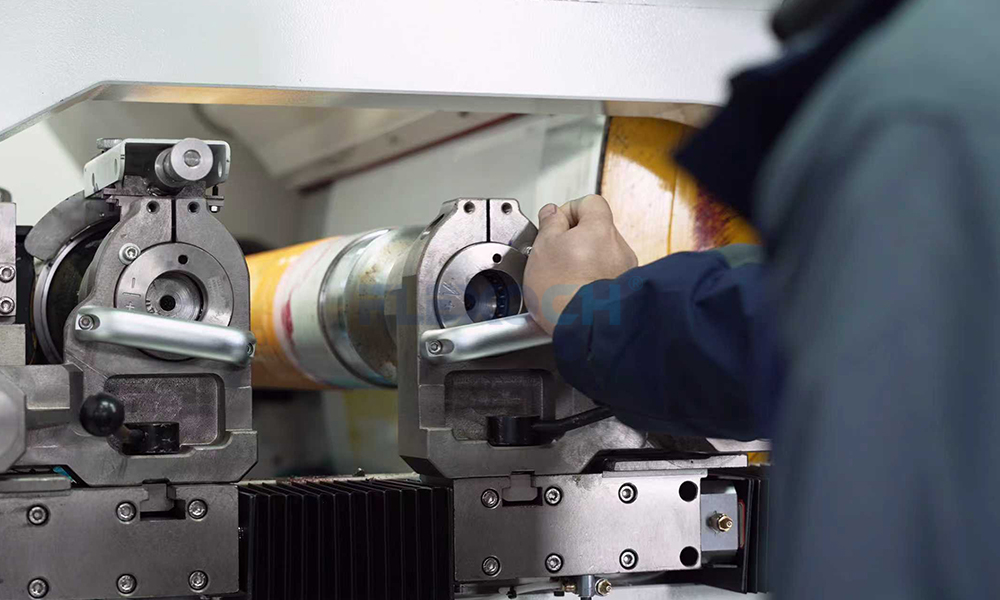
Modern CI flexo presses are designed to support efficient job changes. Digital control systems allow operators to save and recall production parameters, while automatic registration and tension systems can reduce setup time.
The result is a shorter transition from one job to another.
Gravure presses can also be equipped with advanced automation, but the cylinder-based production process means that job preparation can involve additional handling and logistics.
For manufacturers with many short or medium production orders, CI flexo can provide a practical efficiency advantage.
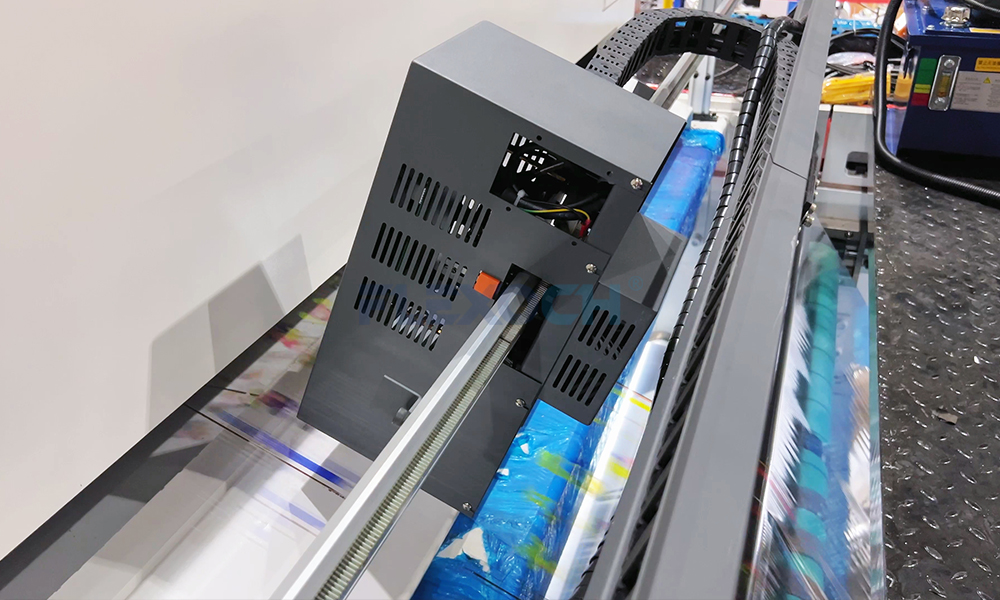
Vidao lncnection
Change Sleeves
4. Production Volume and Order Structure
The ideal printing technology depends strongly on production volume.
For extremely long production runs where the same design is printed continuously, gravure can remain a highly effective solution. Once the cylinders are prepared and the machine is running under stable conditions, it can deliver consistent production over a large quantity of material.
CI flexo, meanwhile, is highly suitable for manufacturers who need greater production flexibility.
For example, a packaging company may produce:
- Several food packaging designs
- Multiple sizes of shopping bags
- Different printed film products
- Seasonal packaging
- Private-label packaging
- Shorter customized orders
In these situations, reducing setup time and simplifying job changes can be more valuable than optimizing the press for only one extremely long production run.
5. Substrate Flexibility
Flexible packaging manufacturers work with a wide range of substrates.
Depending on machine configuration, CI flexographic printing can be used for materials such as:
- PE film
- BOPP film
- PET film
- CPP film
- Laminating films
- Paper
- Other flexible packaging substrates
The central impression structure provides stable substrate handling, which is particularly useful when printing flexible films.
This makes CI flexo technology suitable for a wide range of packaging products, including food packaging bags, shopping bags, daily-use product packaging, and other flexible packaging applications.
Gravure presses also provide broad substrate capabilities, so material compatibility should always be evaluated according to the specific machine configuration and production requirements.
6. Material Waste and Startup Efficiency
Material waste is an important consideration for both economic and environmental reasons.
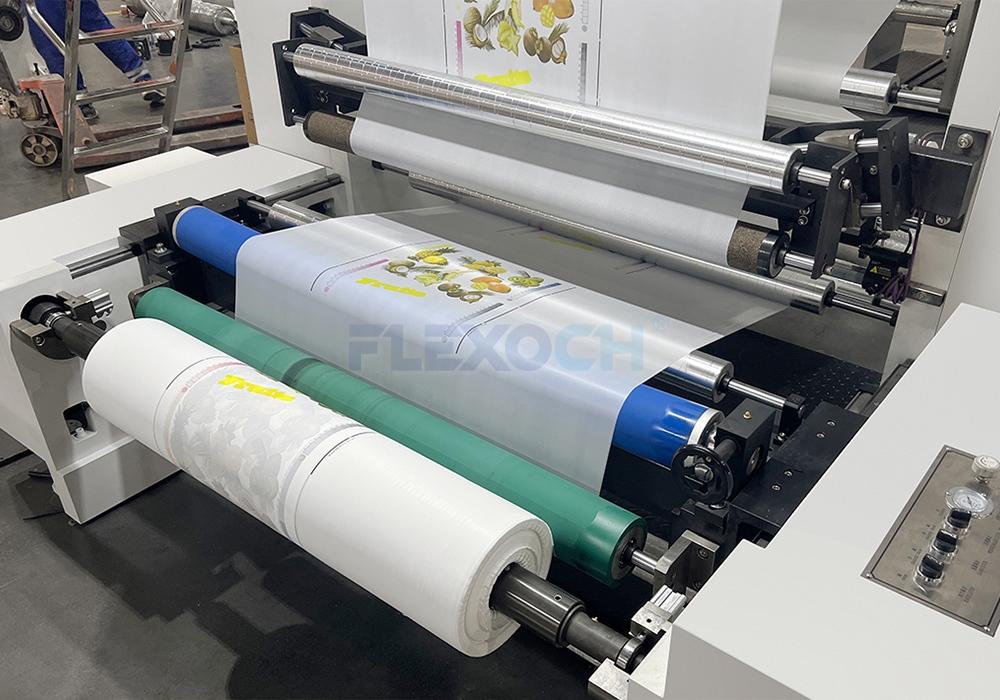
Every production order requires startup and adjustment. During this period, the converter may produce material that cannot be sold because the registration, color, or printing pressure has not yet reached the required standard.
Advanced CI flexo presses use automatic registration, tension control, and digital parameter management to help operators reach stable printing conditions quickly.
Reducing startup waste can provide two benefits:
Lower production costs — less substrate and ink are consumed before production reaches acceptable quality.
More sustainable manufacturing — fewer rejected materials need to be recycled or discarded.
This advantage becomes especially valuable when a converter processes many different jobs every day.
7. Environmental Considerations
Sustainability is becoming an important factor when packaging manufacturers select new printing equipment.
Modern flexographic technology can support water-based inks and other lower-impact printing solutions depending on the specific application and machine configuration.
CI flexo presses can also contribute to sustainability through efficient startup, reduced waste, and flexible production of recyclable packaging materials.
Gravure technology has also developed significantly in response to environmental requirements, and modern gravure systems can incorporate improved drying, ink management, and solvent recovery technologies.
Therefore, the environmental performance of a printing plant depends not only on whether it uses flexo or gravure but also on the complete production system, including inks, drying, substrates, energy consumption, waste management, and operating practices.
8. Automation and Smart Manufacturing
Another important difference is the way modern printing machines integrate with automated production environments.
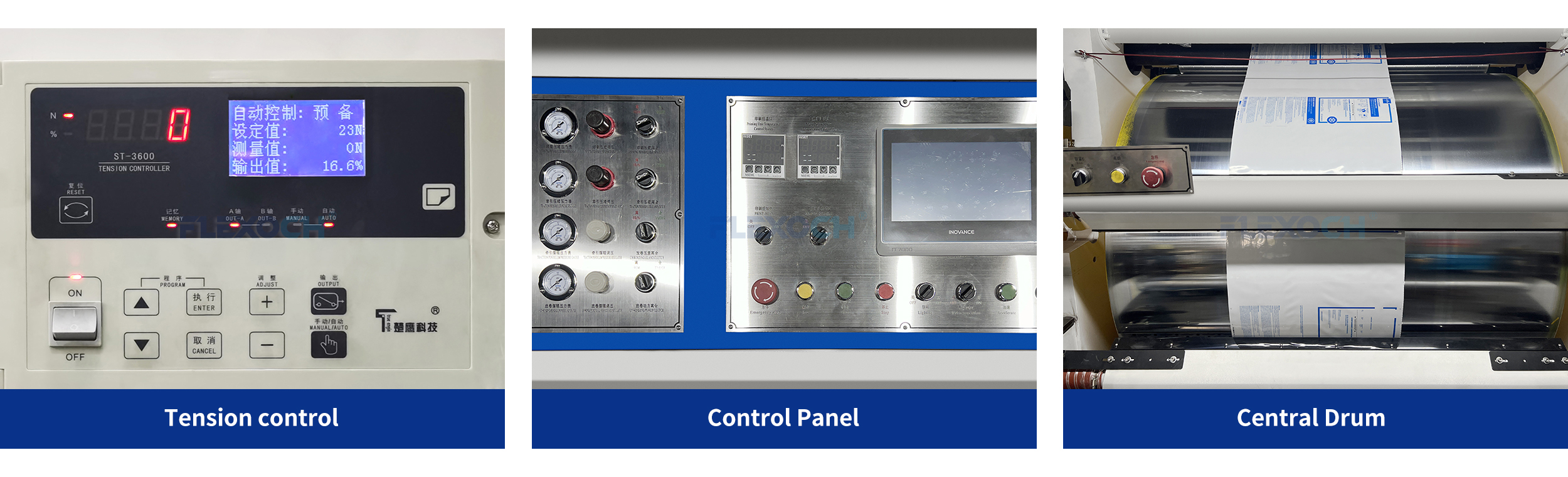
Today’s packaging converters increasingly expect printing presses to provide more than mechanical printing functions. They want equipment capable of collecting production data, storing job parameters, automatically controlling registration, and assisting operators during setup.
A modern CI Flexo Printing Machine can integrate:
- Servo drive technology
- Automatic register control
- Digital HMI operation
- Tension control
- Automatic pressure adjustment
- Production parameter storage
- Online inspection options
These functions help move flexographic printing toward smarter and more efficient manufacturing.
FLEXOCH focuses on combining flexographic printing technology with advanced automation to help customers improve production consistency and reduce unnecessary manual adjustments.
CI Flexo or Gravure: Which One Should You Choose?
There is no universal answer.
A manufacturer should consider several questions before investing in a new press:
Choose CI Flexo When:
- You produce many different packaging designs.
- Your order sizes vary significantly.
- Fast changeovers are important.
- You want flexible substrate options.
- You want to reduce startup waste.
- You are looking for advanced servo-driven automation.
- You need greater flexibility for future packaging trends.
Consider Gravure When:
- Your business focuses heavily on very long production runs.
- The same designs are produced repeatedly.
- Existing gravure cylinder infrastructure is already available.
- Your customers have established gravure-specific requirements.
- Extremely high-volume production is the primary business model.
In practice, some packaging companies may benefit from having both technologies. The correct decision should be based on the company’s production portfolio rather than industry assumptions.
Video Introduction
Why Consider a FLEXOCH CI Flexo Printing Machine?
For converters considering a transition toward modern flexographic production, machine configuration and manufacturer support are just as important as the printing method itself.
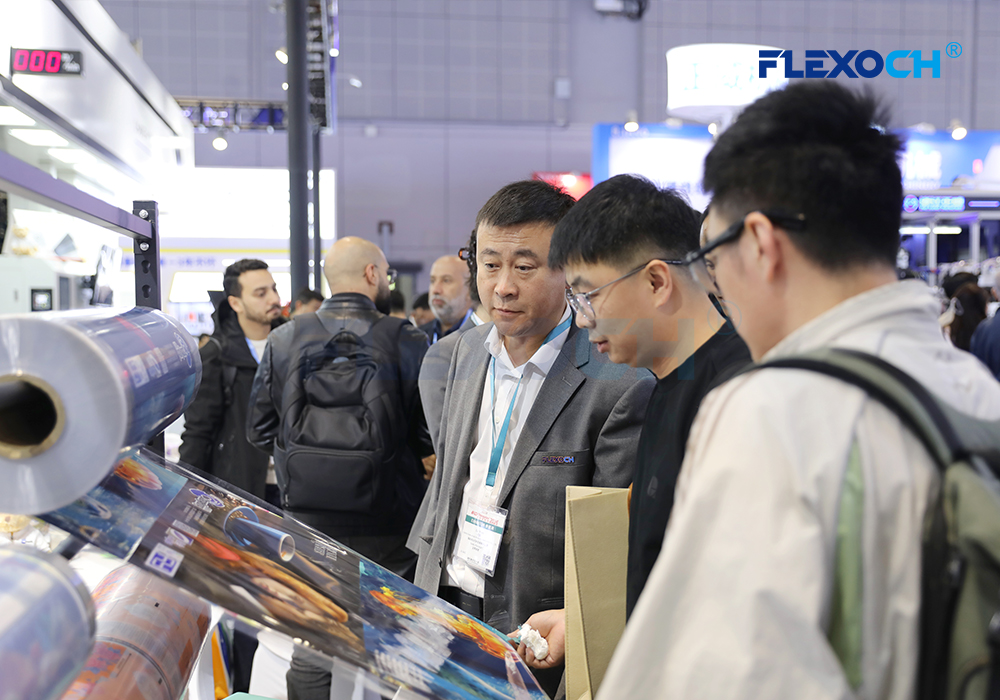
FLEXOCH focuses on providing CI Flexo Printing Machines designed for modern flexible packaging production. The combination of central impression technology, advanced control systems, and efficient printing processes helps customers respond to changing market requirements.
The goal is not simply to achieve high printing speeds. A productive printing machine should also provide stable quality, efficient setup, reliable operation, and flexibility across different production orders.
For manufacturers looking to improve overall production efficiency, a modern CI flexo solution can offer a strong balance between quality and operating flexibility.
Making the Right Investment for Flexible Packaging
The comparison between a CI Flexo Printing Machine and a Gravure Press should not be reduced to a simple question of which technology is better.
Gravure remains a powerful solution for high-volume production where consistent long-run output is the primary requirement. CI flexo, meanwhile, has become an increasingly competitive option for converters that need high-quality printing combined with fast changeovers, flexible production, advanced automation, and efficient material utilization.
As flexible packaging markets continue to evolve, production flexibility is becoming just as important as maximum machine speed. Packaging converters need to handle more designs, shorter lead times, changing materials, and increasingly demanding quality requirements.
For these manufacturers, modern CI Flexo Printing Machine technology provides an effective path toward more flexible and efficient packaging production.
With ongoing development in servo control, registration systems, automation, and flexographic printing technology, FLEXOCH continues to provide CI flexo printing solutions for packaging manufacturers seeking reliable performance and long-term production value.