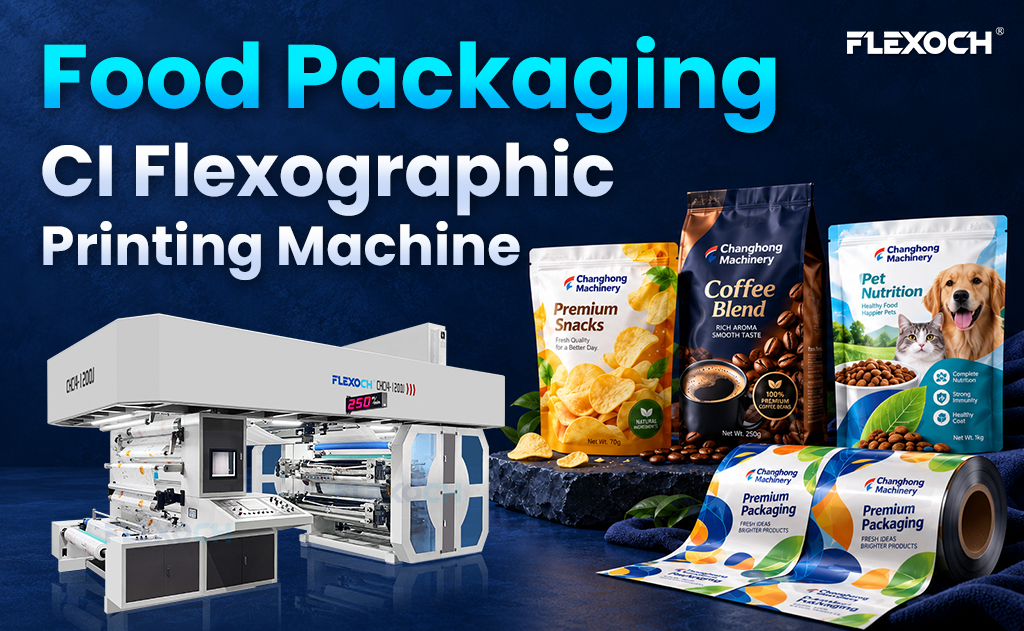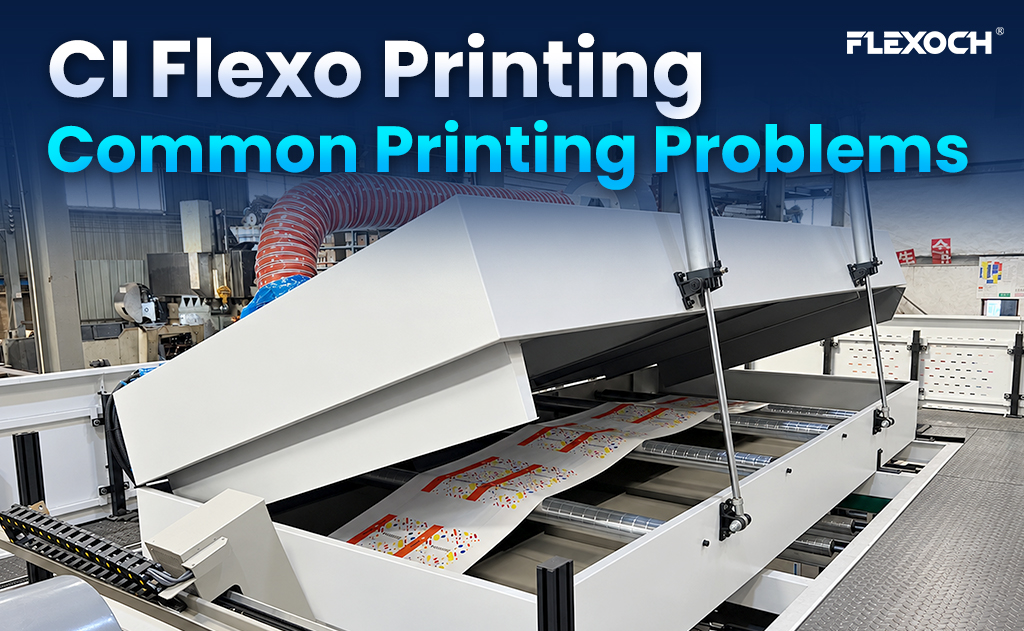








Central Impression Flexo Printing Machine: Improving Quality and Efficiency in Flexible Packaging Printing
Flexible packaging manufacturers are under constant pressure to deliver attractive graphics, reliable quality, competitive costs, and shorter lead times. At the same time, packaging designs are becoming more detailed, material choices are expanding, and production runs are increasingly diverse.
These requirements have made printing equipment an important part of a converter’s production strategy. For applications involving flexible films and multi-color graphics, the Central Impression Flexo Printing Machine offers a combination of substrate stability, printing accuracy, and production efficiency.
Also known as a CI flexographic press, this equipment uses a large central impression cylinder to support the substrate as it passes through multiple printing stations. Combined with modern automation and electronic control, the technology can provide consistent results across a wide range of packaging applications.
With its focus on modern flexographic technology, FLEXOCH develops printing solutions designed to meet the practical requirements of today’s packaging converters.

Table of Contents
ToggleWhat Is a Central Impression Flexo Printing Machine?
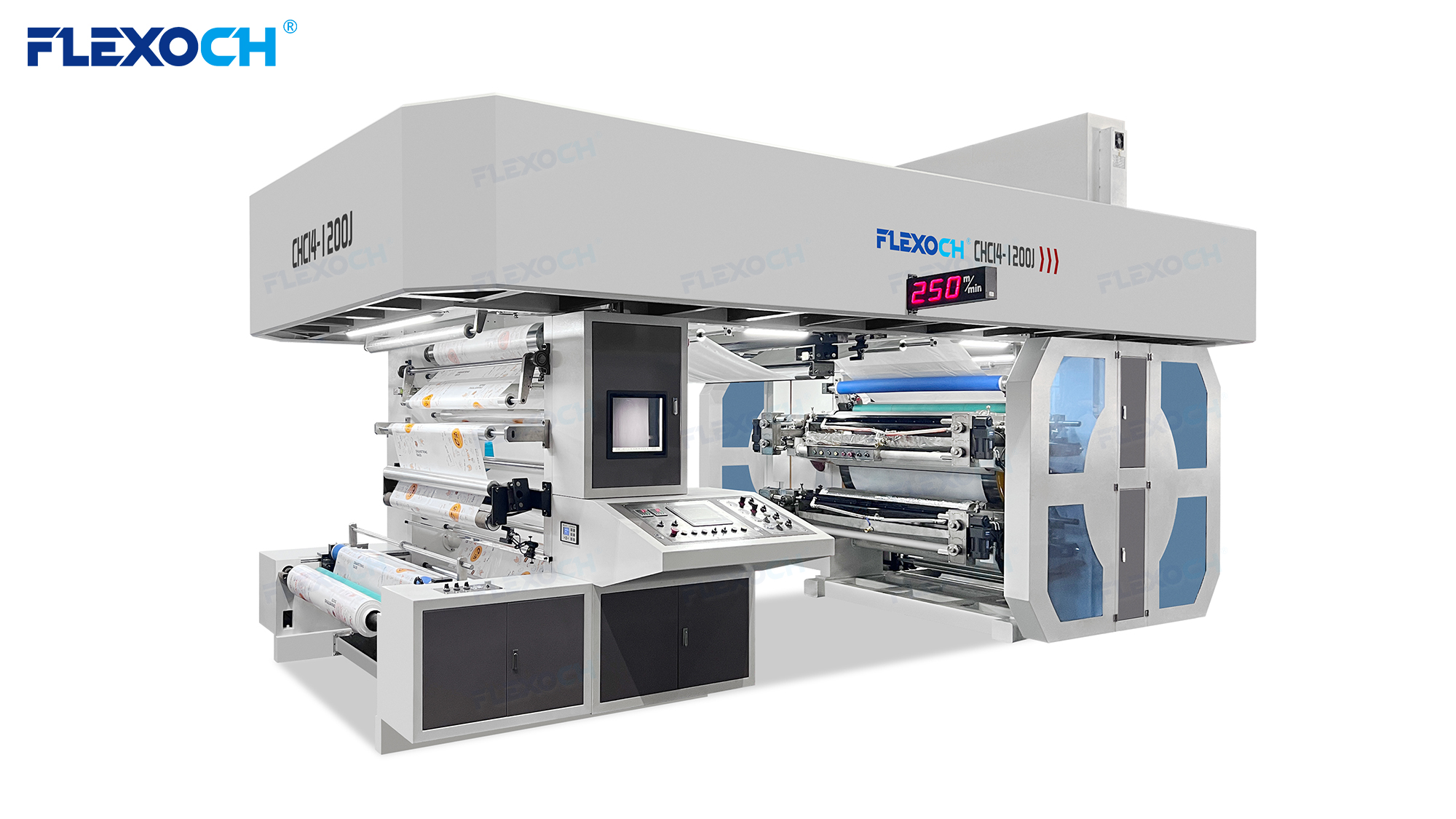
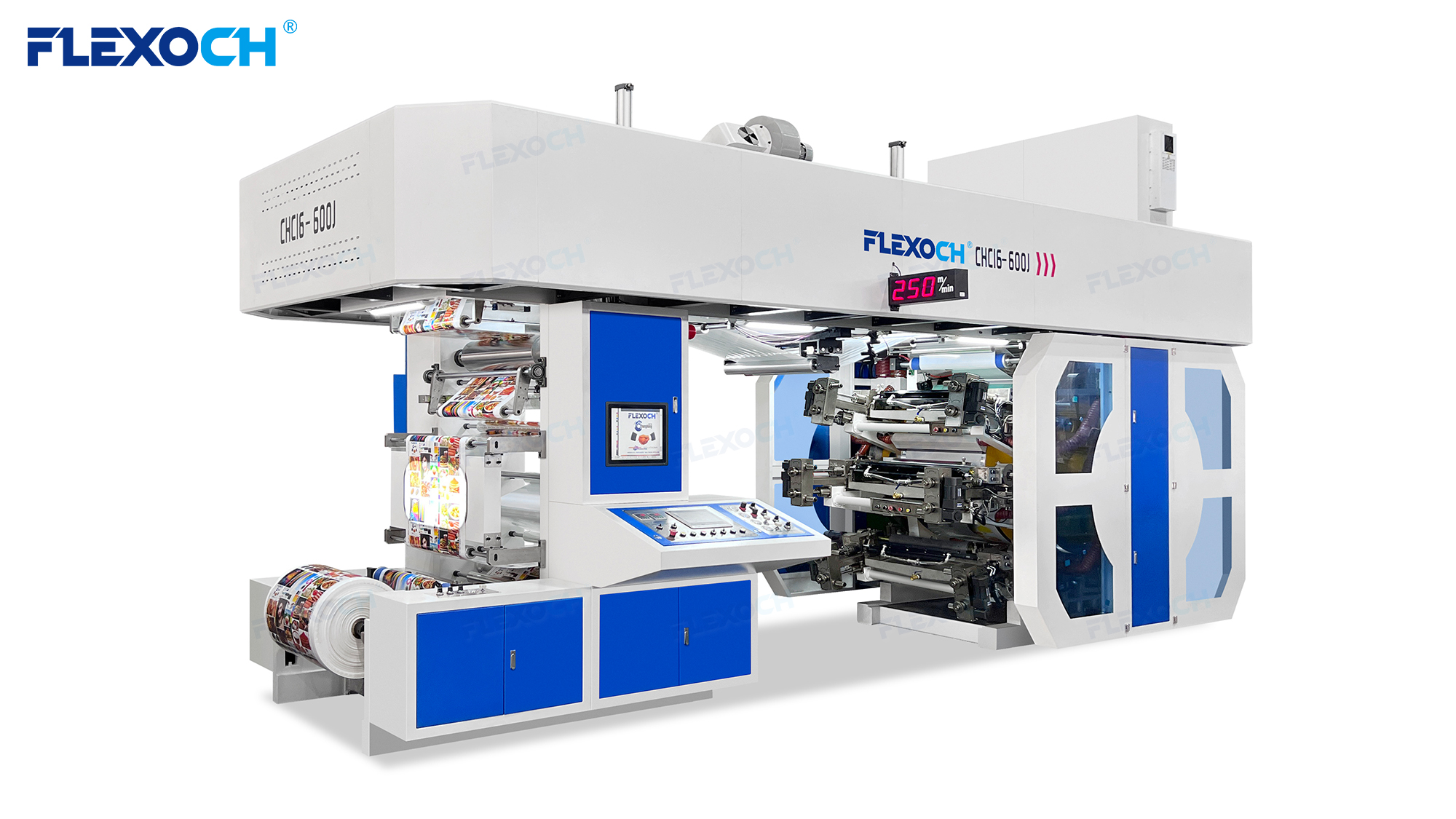
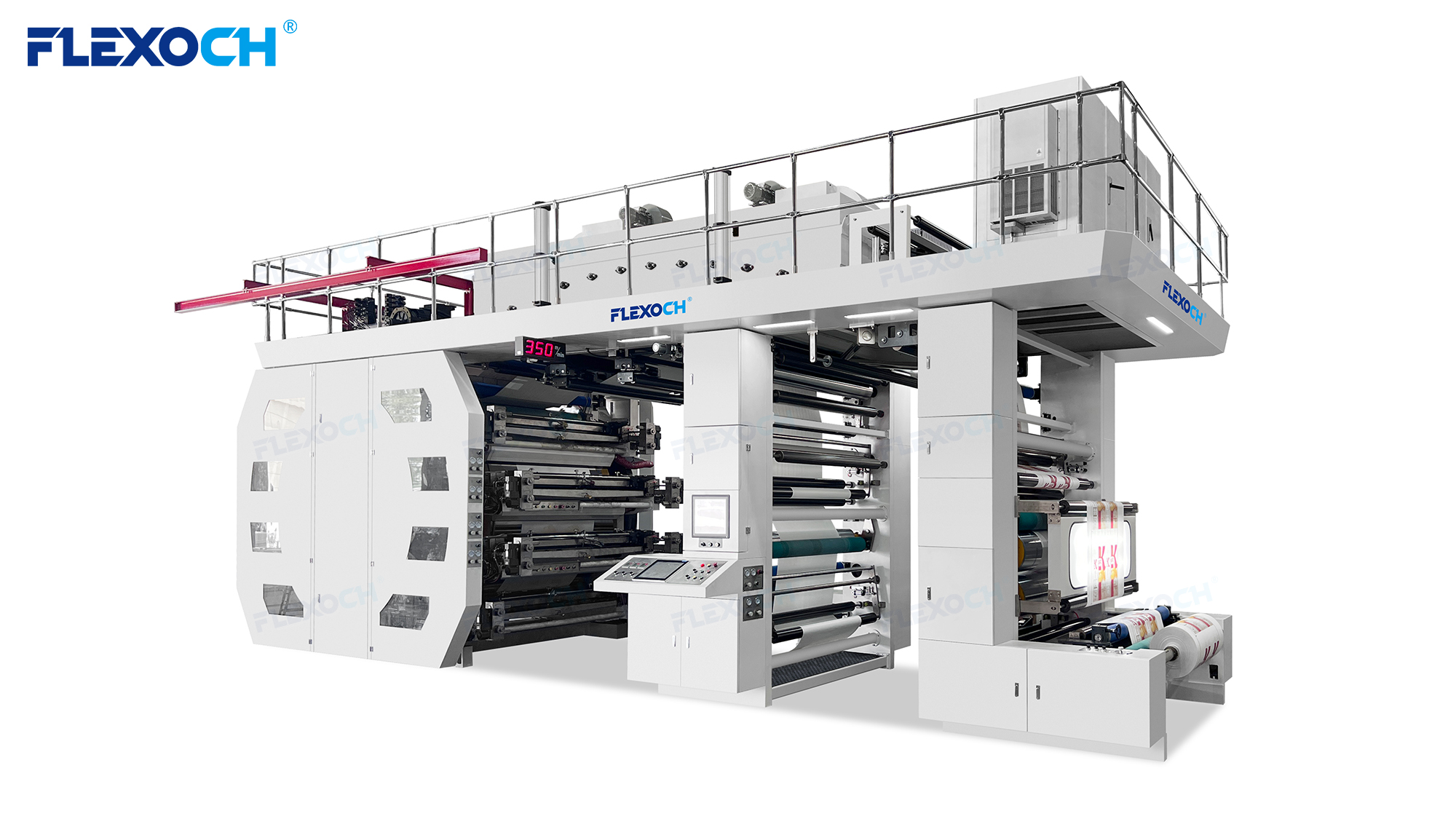
A Central Impression Flexo Printing Machine features several printing units positioned around a large central impression cylinder. The substrate remains supported against the central cylinder as it travels through successive printing stations, with each unit transferring one color.
A typical configuration may include:
- Central impression cylinder
- Multiple printing units
- Anilox rollers
- Plate cylinders
- Ink circulation systems
- Servo motors
- Automatic registration control
- Web tension control
- Drying units
- Unwinding and rewinding systems
- Digital operating interface
The number of colors, working width, printing speed, and automation level can be configured according to the intended application.
This configuration is particularly relevant to converters working with flexible substrates where stable web handling and accurate multi-color registration are important.

Material Feeding Diagram

How the Central Impression Design Improves Printing Performance
The central impression cylinder is one of the defining features of this type of press. Its primary function is to provide a stable surface against which the substrate can be held while moving through multiple printing stations.
This is especially useful when working with thin or flexible films. Changes in web tension, speed, or printing pressure can cause flexible materials to stretch or shift, potentially affecting registration.
By maintaining continuous contact with the central cylinder, the substrate can follow a more controlled path through the printing section.
The result is a combination of benefits rather than a single technical advantage:
- Improved substrate stability
- More consistent color registration
- Better control at higher production speeds
- Reduced variation during long printing runs
- More reliable reproduction of multi-color graphics
This controlled printing environment is one reason CI technology is widely used for demanding flexible packaging applications.
Integrated Control for Accurate and Efficient Printing
The mechanical structure of the press is only one part of modern flexographic performance. Electronic control systems increasingly determine how efficiently the machine can maintain consistent printing conditions.
Modern equipment can combine servo drive technology, automatic registration, and web tension control into an integrated production system.
Servo motors provide precise control of individual printing units, while automatic registration systems can monitor printed marks and compensate for deviations. At the same time, tension control manages the movement of the substrate from unwinding through printing and rewinding.
Together, these systems can help maintain:
- Accurate cylinder positioning
- Stable web movement
- Consistent color alignment
- Faster response to production adjustments
- More repeatable printing results
Digital control can also allow production parameters to be stored and recalled for repeat orders. This can simplify setup and reduce the amount of manual adjustment required when the same job is produced again.
The value of these technologies is therefore not simply automation for its own sake. Their main purpose is to make the entire printing process more stable and predictable.
Detail Image


Printing Quality for Modern Packaging Designs
Packaging is often the first point of contact between a consumer and a product. Logos, product images, color schemes, instructions, and other graphics must therefore be reproduced clearly and consistently.
Modern flexographic printing has developed significantly through improvements in photopolymer plates, anilox technology, inks, plate mounting, and electronic controls.
A well-configured press can support applications involving:
- Fine text
- Brand logos
- Solid colors
- Detailed illustrations
- Multiple-color graphics
- High-resolution packaging designs
The final result depends on the complete printing process rather than the machine alone. Plate quality, ink formulation, substrate characteristics, anilox selection, printing pressure, and operating parameters all influence the finished product.
For this reason, converters should evaluate printing equipment as part of an integrated production system rather than focusing on one specification in isolation.
Flexible Substrate Handling
Film printing presents different challenges from printing on rigid materials. Flexible substrates can vary considerably in thickness, surface properties, elasticity, and ink compatibility.
Depending on the configuration, a Flexible Packaging Printing Machine can be designed to process materials such as:
- PE film
- BOPP film
- CPP film
- PET film
- Laminating films
- Paper-based packaging materials
- Other flexible substrates
Stable web handling is essential throughout unwinding, printing, drying, and rewinding.
This is particularly important for thin films, where excessive or inconsistent tension can affect dimensional stability and color registration.
For converters processing several substrate types, equipment flexibility can also reduce the need to dedicate separate printing systems to individual product categories.

Improving Production Efficiency
For packaging converters, productivity is determined by more than maximum printing speed.
A press that runs quickly but requires extensive setup or frequent manual intervention may not deliver the expected output over a full production day.
Modern CI presses can improve overall efficiency through several complementary functions.
Faster Job Setup:Digital parameter management allows production settings to be stored and recalled, making repeat jobs easier to prepare.
Reduced Startup Waste:Automatic registration and controlled web handling can help the machine reach stable printing conditions more quickly.
Continuous Production:The web-based printing process allows large quantities of material to be processed continuously.
Consistent Operation:Integrated control systems reduce unnecessary manual adjustments and help maintain stable conditions throughout the production run.
The combined effect can be significant for converters producing multiple jobs in a single day.
Supporting More Flexible Production
Packaging markets are becoming increasingly diverse. A converter may produce large orders for established brands while also handling smaller batches, seasonal packaging, or customized designs.
This makes production flexibility an important consideration when selecting equipment.
A modern Flexible Packaging Printing Machine can accommodate different jobs through adjustable:
- Printing widths
- Number of colors
- Production speeds
- Substrate types
- Ink systems
- Automation levels
This adaptability allows manufacturers to respond to changing customer requirements without fundamentally changing their production process.
For growing packaging businesses, a versatile press can also provide room for future product expansion.
Video Introduction
Applications Across the Packaging Industry
CI flexographic technology is used across numerous packaging segments.
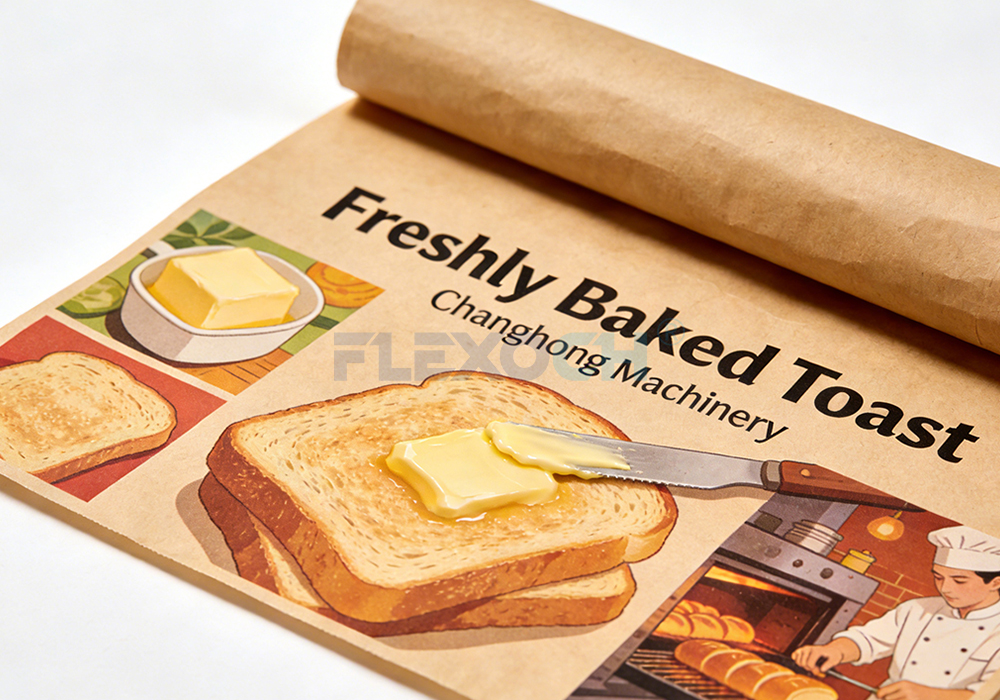
Food Packaging:Printed films are widely used for snacks, confectionery, frozen foods, and other products where attractive graphics and reliable print quality are important.
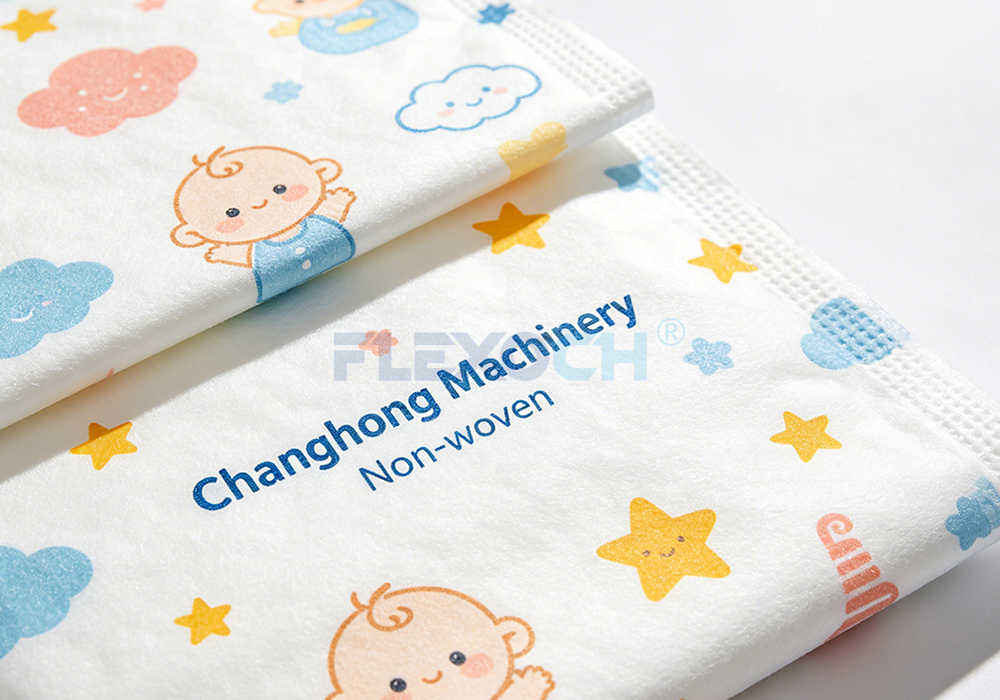
Household and Personal Care Packaging:Detergent, hygiene, and personal care products often require branded flexible packaging with clear graphics and product information.
Retail Bags:Shopping and promotional bags can use multi-color printing for brand identification and product communication.
Industrial Packaging:Flexible industrial packaging may require clear logos, product information, handling instructions, or identification graphics.
Film Conversion:Converters producing printed rolls for laminating or bag-making operations can integrate flexographic printing into larger packaging production lines.
The appropriate machine configuration depends on substrate characteristics, ink requirements, artwork, production volume, and downstream processes.
Central Drum Flexo Printing Machine: What Buyers Should Consider
The term Central Drum Flexo Printing Machine is commonly used to describe a press based on the central-impression configuration.
While the central drum provides important substrate support, buyers should evaluate the complete machine rather than selecting equipment based on the central cylinder alone.
Important considerations include:
Printing Width:The working width should match current products while leaving sufficient capacity for future requirements.
Number of Colors:The number of printing stations should correspond to the artwork and customer specifications typically handled by the converter.
Substrate Range:The machine should be tested or evaluated against the actual films, papers, and other materials used in production.
Effective Production Speed:Maximum speed is useful as a reference, but real production performance should also account for setup, drying, substrate characteristics, and operating conditions.
Automation:Servo drives, registration systems, tension control, and digital job management can improve consistency and reduce operator workload.
Service and Support:Installation, operator training, maintenance, spare parts, and technical assistance all contribute to long-term machine performance.
Taking these factors together gives manufacturers a more realistic basis for evaluating a new press.
Printing Sample


Efficiency and Material Waste
Material waste is an important concern for both production economics and sustainability.
Waste can occur during startup, registration, color adjustment, job changes, and unstable operating conditions.
Modern control systems can help shorten the time required to reach stable production. Accurate registration reduces the amount of material rejected because of color alignment problems, while repeat-job settings can simplify the setup process.
For converters handling a high number of orders, even a small reduction in waste per job can become significant over time.
This makes setup efficiency and process stability important considerations alongside machine speed.
Why Choose FLEXOCH for CI Flexographic Printing?
Investing in printing equipment is a long-term decision. Machine reliability, application compatibility, operating efficiency, and technical support all influence the value of the investment.
FLEXOCH focuses on developing flexographic printing solutions for packaging manufacturers seeking stable and efficient production.
Its CI printing solutions combine the central-impression configuration with technologies designed for modern packaging production, including servo control, registration management, tension control, and digital operation.
The objective is to provide converters with equipment capable of maintaining consistent print quality while supporting practical production requirements across different applications.
Rather than focusing solely on maximum speed, FLEXOCH emphasizes a balanced approach that considers print quality, machine stability, production flexibility, and long-term usability.

Looking Ahead: The Evolution of CI Flexographic Printing
The next stage of flexographic printing is likely to focus increasingly on intelligent control, automation, efficiency, and adaptability.
Packaging manufacturers are looking for equipment that can respond to changing orders, reduce setup time, minimize material waste, and maintain consistent quality with less manual intervention.
Developments in servo technology, automatic registration, digital controls, inspection systems, and production data management will continue to influence the design of modern presses.
These developments can help converters move toward more connected and efficient production environments while maintaining the flexibility required by modern packaging markets.
Conclusion
The Central Impression Flexo Printing Machine combines a central impression structure with advanced control technologies to provide a practical solution for flexible packaging production.
Its performance comes from the interaction of several systems: stable substrate support, accurate printing control, servo technology, tension management, and automation. Rather than relying on one feature, the complete system works together to improve consistency and efficiency.
For manufacturers working with flexible films and demanding multi-color graphics, a CI Flexo Printing Machine can provide the substrate stability and production flexibility required for modern packaging applications.
As flexographic technology continues to evolve, FLEXOCH remains focused on developing reliable printing solutions that help packaging manufacturers improve print quality, production efficiency, and operational flexibility.