






CI, Gearless, Stack or Inline Flexo Printing Machine: Which Technology Fits Your Production Needs?
Choosing the right flexographic printing machine is an important decision for packaging manufacturers. Different machine structures are designed to meet different production requirements, from high-quality printing on flexible plastic films to paper packaging, industrial bags, and other roll-to-roll applications. Factors such as substrate type, printing width, number of colors, production speed, registration accuracy, and automation level all influence the final equipment selection.
For businesses planning to expand production capacity or upgrade existing printing lines, understanding the differences between CI, gearless, stack, and inline flexo printing machines can help identify a suitable solution. FLEXOCH offers a range of flexographic printing equipment designed for different materials and production scenarios, allowing manufacturers to evaluate machine configurations according to their actual needs.
Table of Contents
Toggle1. CI Flexo Printing Machines: Stability for Flexible Packaging
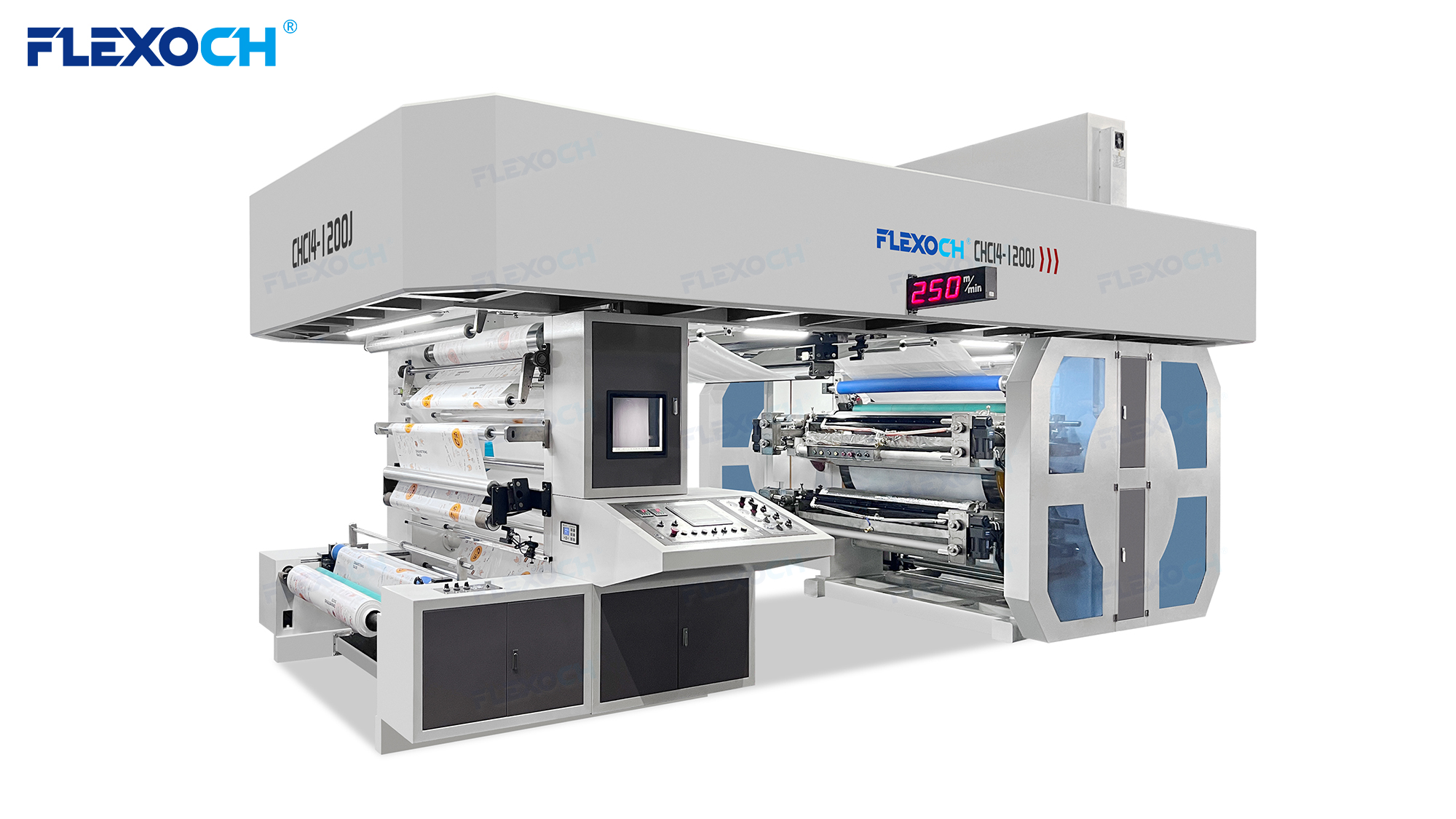
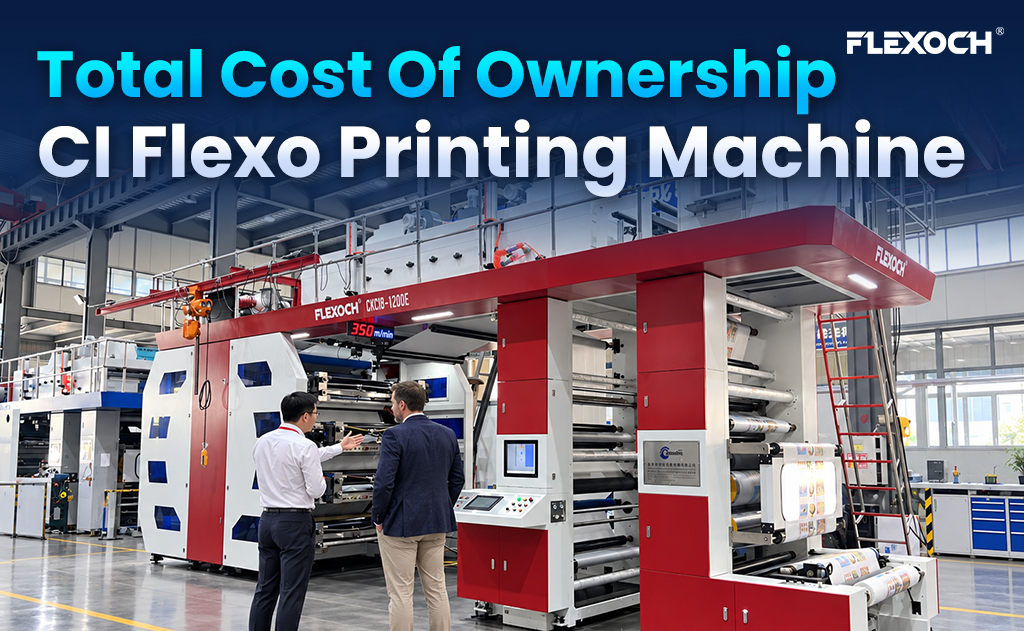
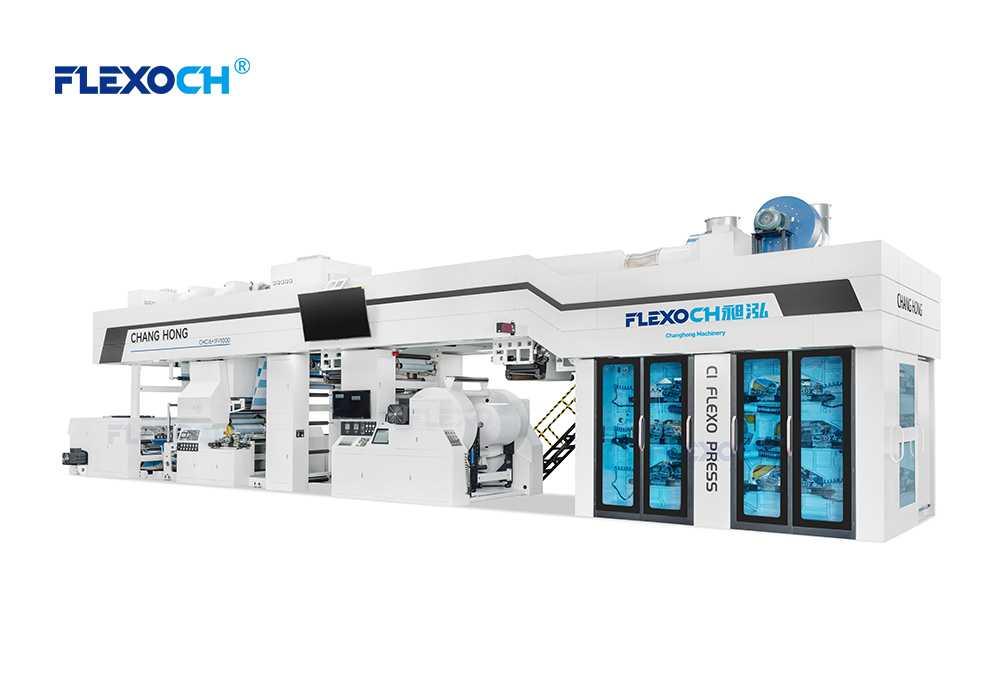
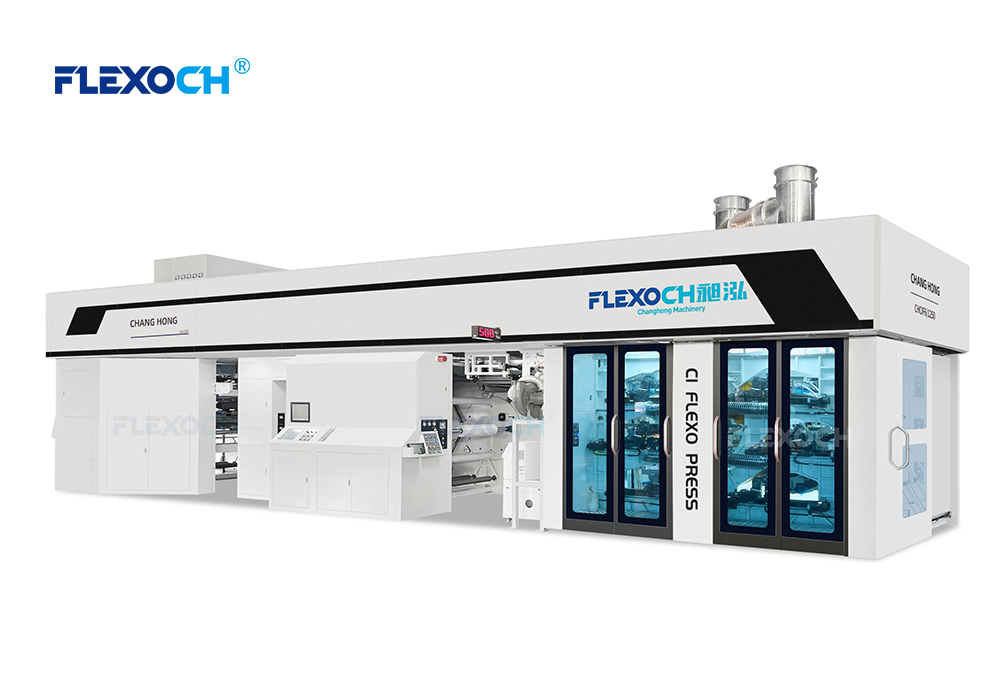
Central Impression (CI) flexo printing machines use a large central impression cylinder to support the substrate as it passes through multiple printing stations. This structure helps maintain consistent contact between the material and the printing cylinder during the printing process.
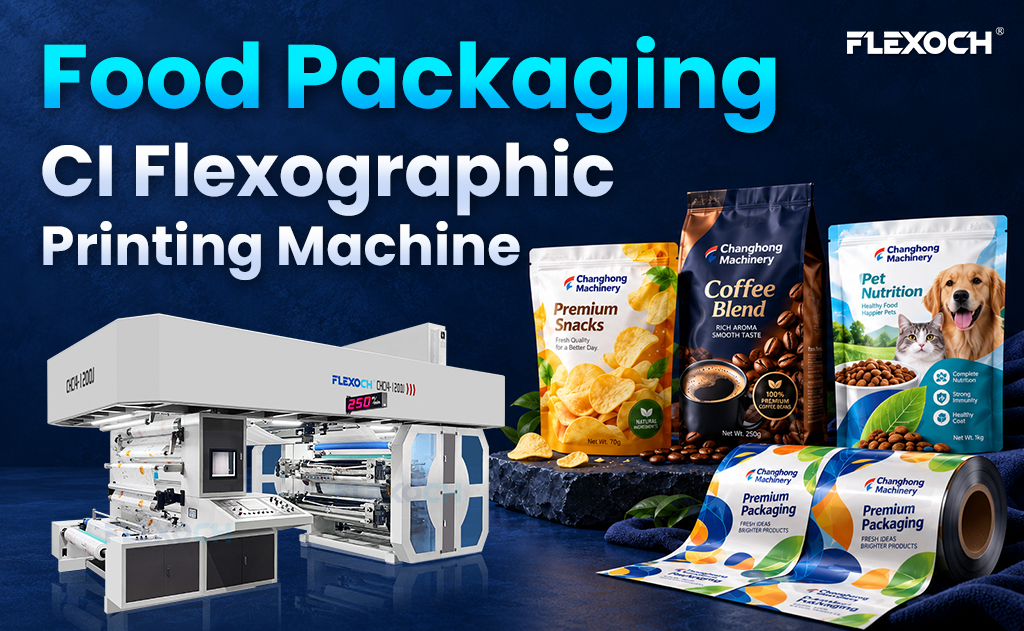
CI flexo printing machines are widely used for flexible packaging applications, particularly those involving thin plastic films such as PE, BOPP, PET, and CPP. These materials can stretch, wrinkle, or shift during processing if web tension and guiding are not properly controlled. The central impression structure helps stabilize the substrate and supports accurate multicolor printing.
Typical applications include food packaging films, snack bags, frozen food packaging, consumer product packaging, and other flexible packaging materials. Depending on the machine configuration, additional systems such as automatic register control, closed-loop tension control, corona treatment, viscosity control, and web inspection can support more consistent production.
CI flexo printing machines are particularly worth considering when a manufacturer handles flexible films regularly and requires stable multicolor registration across continuous production runs.
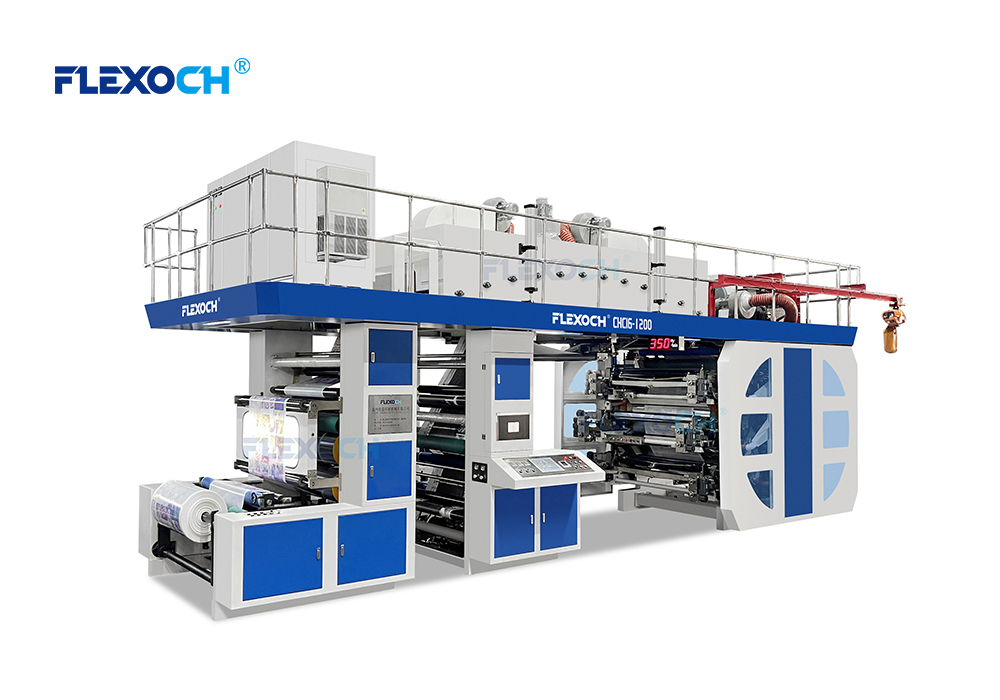
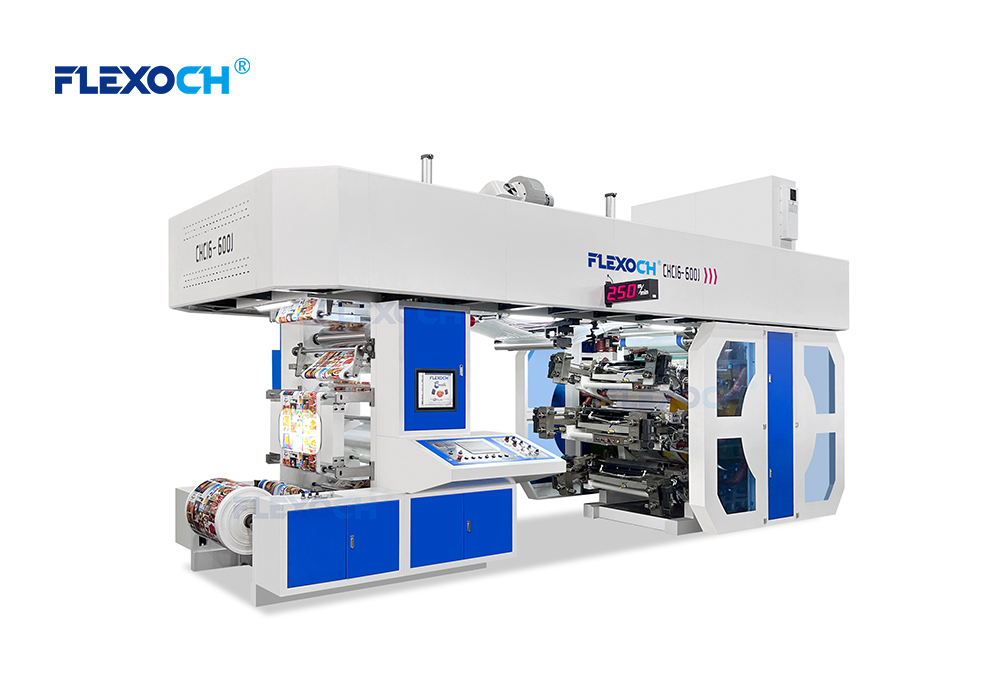
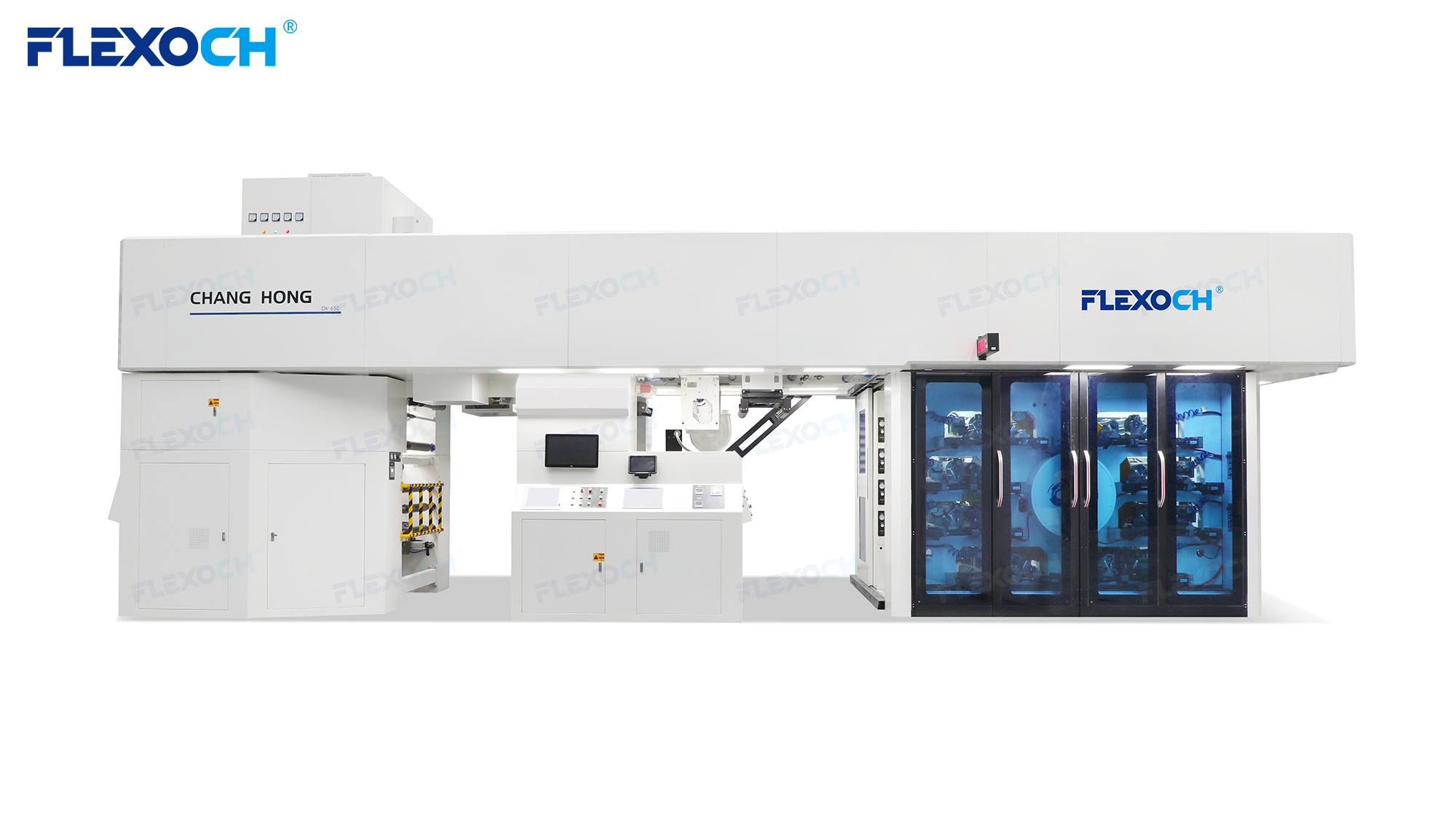
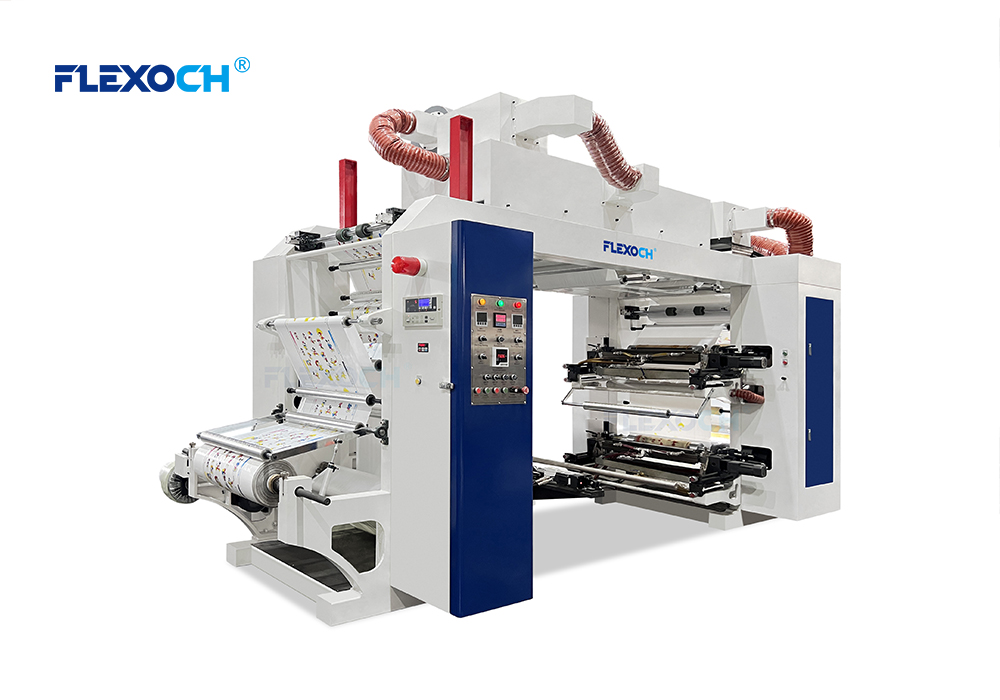
Traditional printing machines may use mechanical gears to transmit motion between printing units. Gearless flexo printing machines use independently controlled servo motors and electronic synchronization to manage the movement of printing units.
This drive configuration reduces dependence on mechanical gear transmission and allows printing units to be controlled electronically. Depending on the design, it can support precise registration adjustments, flexible speed control, and more convenient job changes.
Gearless technology can be especially valuable for manufacturers handling frequent design changes, multiple printing jobs, or demanding registration requirements. It may also help reduce certain mechanical transmission-related maintenance tasks, although overall maintenance requirements still depend on the machine structure, operating conditions, and maintenance practices.
Gearless systems can be integrated into different flexographic press configurations, including CI machines. Therefore, gearless and CI are not necessarily competing categories: one describes the drive system, while the other describes the printing structure.
For manufacturers seeking advanced electronic control and greater flexibility in production management, a gearless flexo printing machine may be a suitable option.
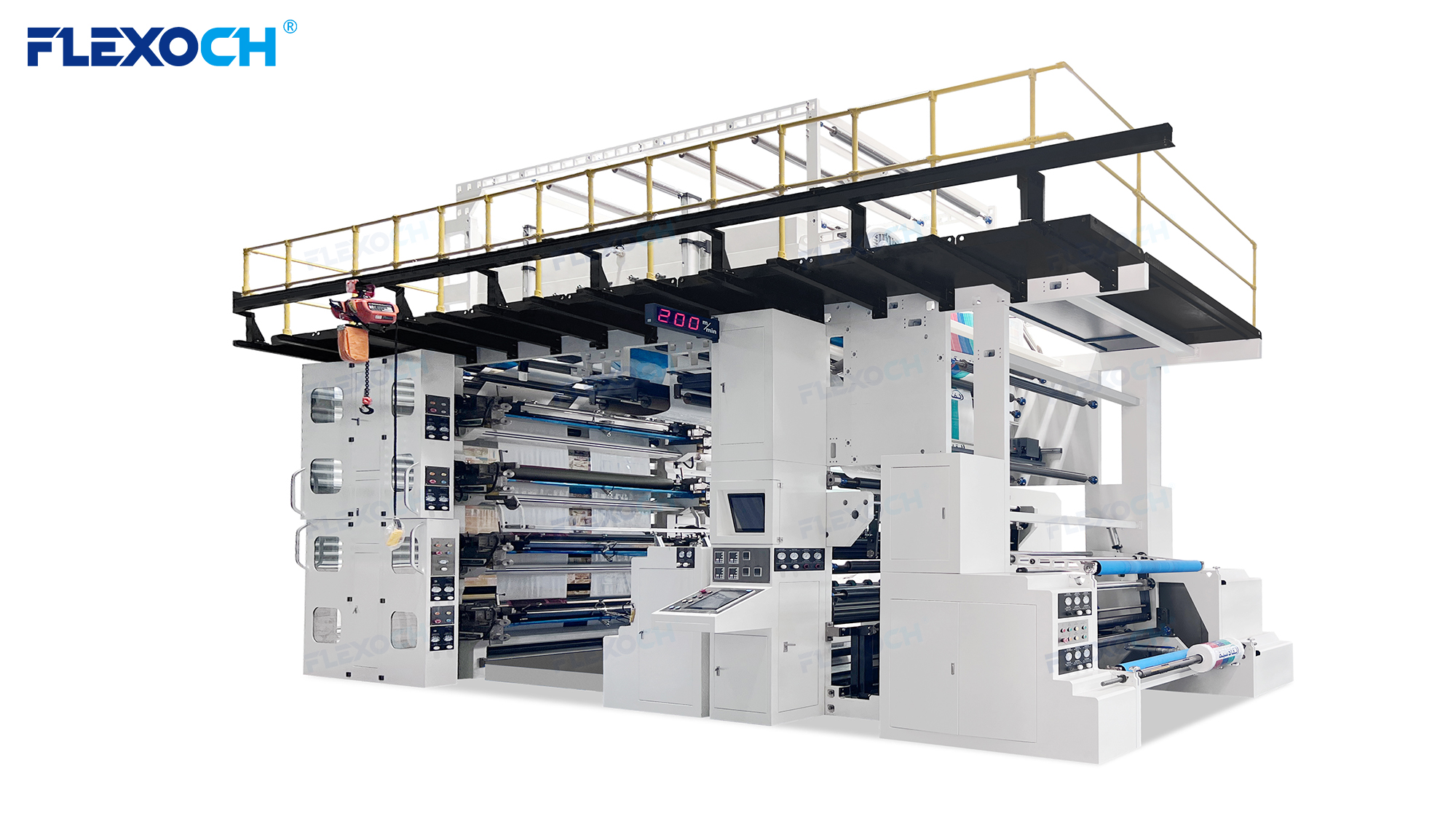
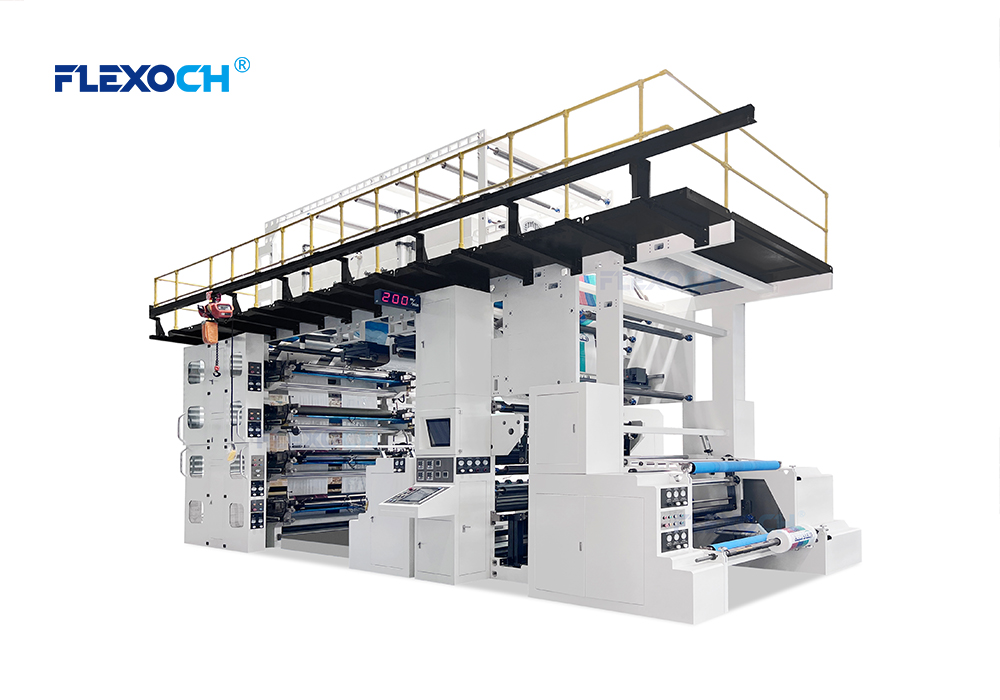
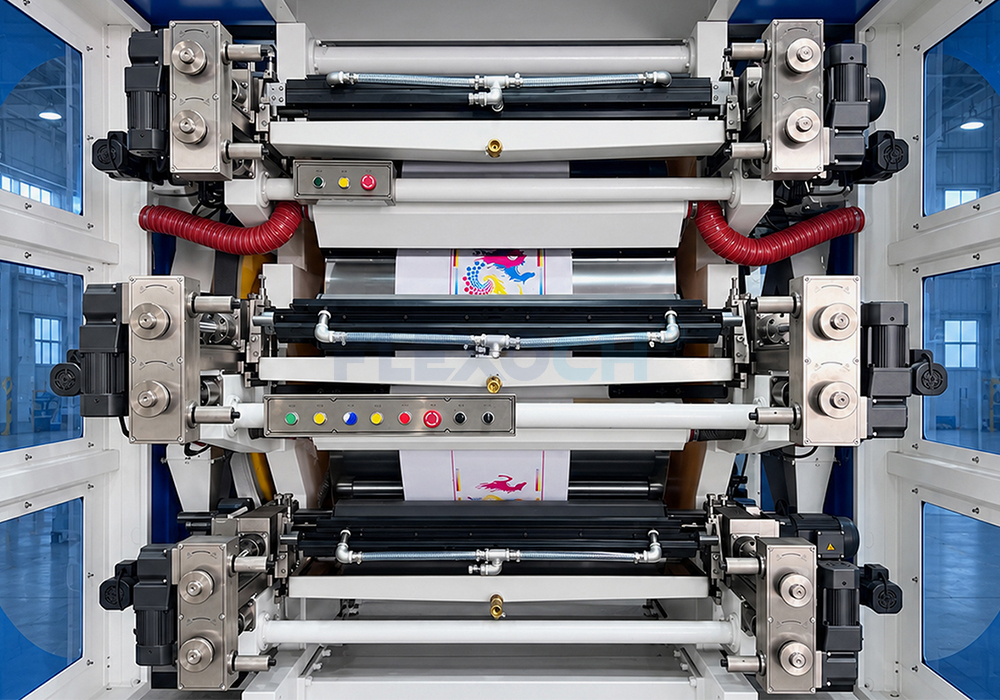
Stack flexo printing machines arrange printing units vertically, with each unit positioned above or below another. This structure provides flexibility in configuring printing colors and can accommodate a variety of substrates and printing requirements.
Stack machines are used for applications involving plastic films, paper, nonwoven materials, and PP woven fabrics, depending on the equipment configuration. They can be considered for packaging bags, industrial sacks, shopping bags, and other products requiring different color combinations.
One advantage of the stack structure is its configuration flexibility. Manufacturers can evaluate different printing-unit arrangements according to their product mix, such as 2+2, 4+2, 4+4, 6+0, or other suitable combinations. The appropriate arrangement depends on the intended printing process and whether printing is required on one or both sides of the material.
Stack flexo printing machines may be a practical choice for businesses that need to accommodate varied applications without necessarily adopting a large central impression structure.
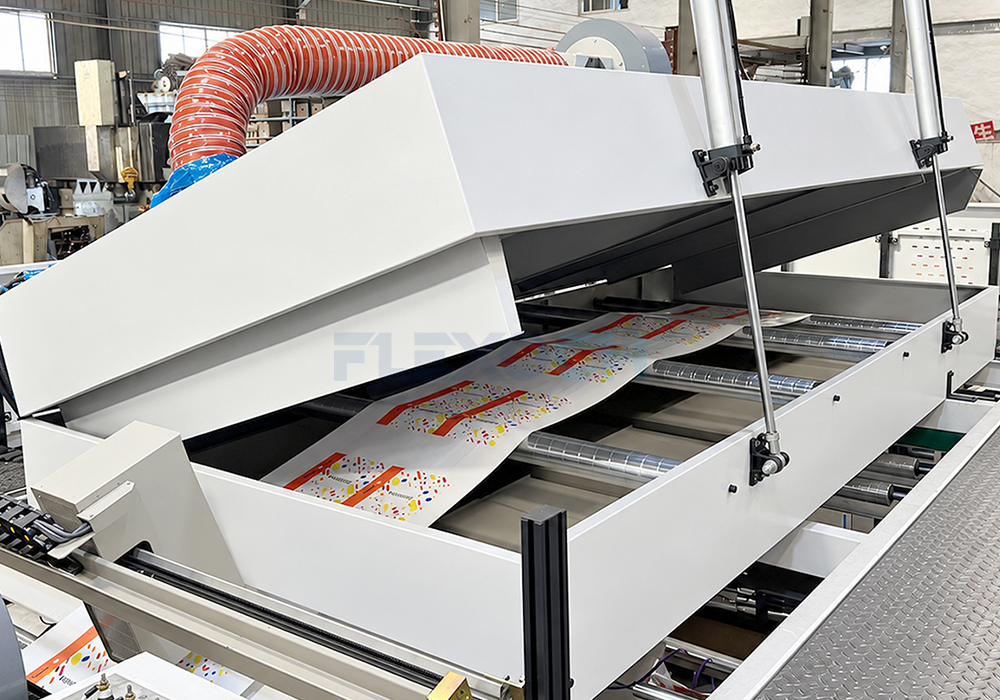
When selecting a stack machine, manufacturers should pay attention to substrate handling, tension control, drying capacity, color requirements, and the accessibility of printing units for operation and maintenance.
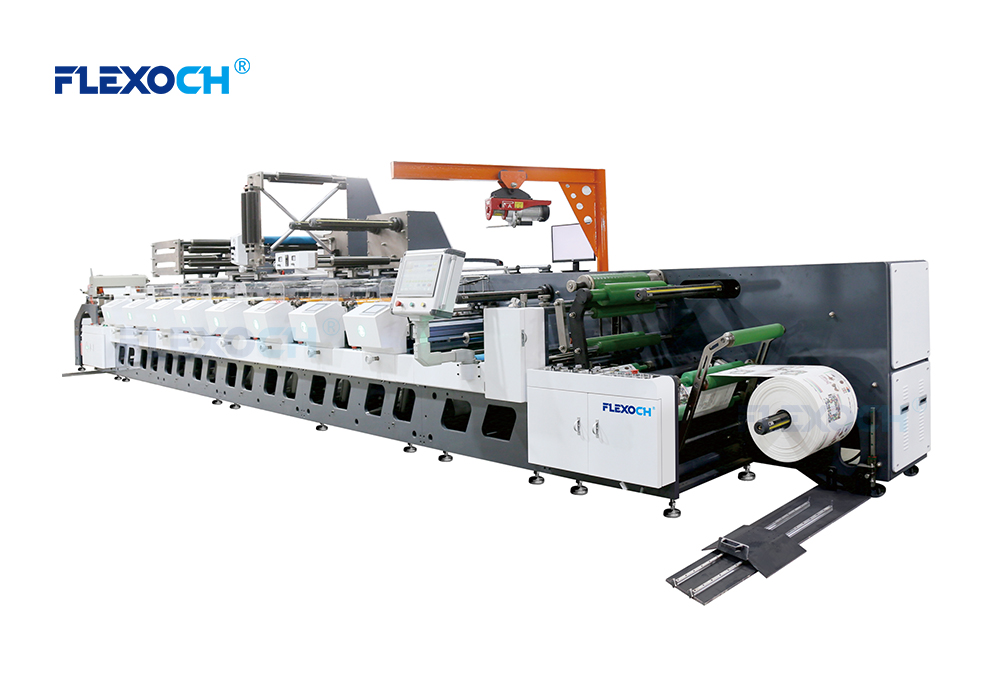
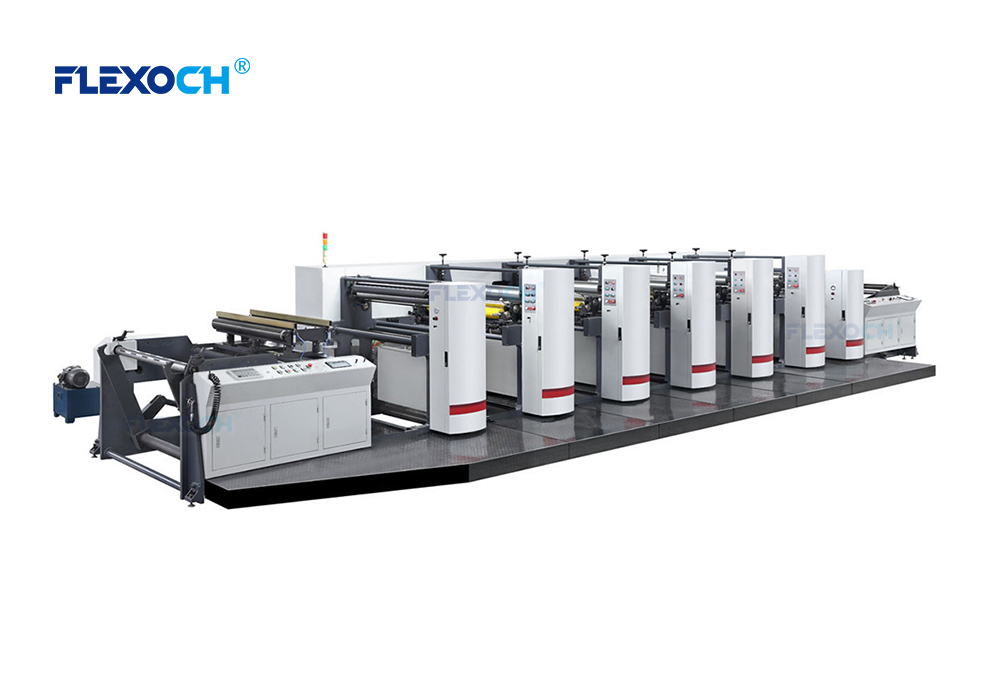
Inline flexo printing machines arrange printing units in a linear configuration. Depending on the application, the printing section can be integrated with other converting or finishing processes, allowing multiple production stages to be coordinated within one line.
This configuration can be considered when manufacturers need to connect printing with processes such as coating, laminating, die-cutting, or other downstream operations. The actual integration possibilities depend on the machine design, the required finishing functions, and the characteristics of the material being processed.
Inline configurations can be useful for production environments where process integration and workflow coordination are important. By reducing the need to transfer material between separate machines for compatible operations, an integrated line may help streamline production and material handling.
However, integration also requires careful planning. Manufacturers should assess the speed compatibility of each process, the available installation space, changeover requirements, and the level of automation needed. A well-designed production line should balance process integration with operational flexibility and maintenance accessibility.
For businesses with specific converting requirements, an inline flexo printing machine may offer a practical route toward a more integrated manufacturing workflow.
5. Key Factors to Consider Before Choosing a Flexo Printing Machine
Although machine structure is important, it should not be the only factor in the purchasing decision. A suitable printing solution should match the manufacturer’s current production needs while allowing reasonable room for future development.
Substrate compatibility
Identify the materials to be printed, including PE, BOPP, PET, CPP, paper, nonwoven fabrics, or PP woven materials. Different substrates have different requirements for tension control, guiding, drying, and surface treatment.
Printing width and color count
The machine’s usable printing width should match the dimensions of the products being manufactured. The number of printing colors should reflect the complexity of the artwork and the company’s typical order requirements.
Production speed and quality targets
Maximum machine speed alone does not determine productivity. Actual output depends on the substrate, artwork, ink system, drying performance, changeover time, and required quality standards.
Automation and control systems
Features such as automatic register control, electronic tension management, web guiding, and inspection systems can help improve process control. Their value depends on the production environment and the operator’s workflow.
Future expansion and operating costs
Manufacturers should also consider maintenance requirements, energy consumption, spare parts, operator training, and the possibility of adding functions in the future. Evaluating these factors helps provide a more complete picture of long-term operating value.
6. Comparing the Four Flexographic Printing Technologies
The following comparison provides a general reference. Actual capabilities depend on the specific machine model and configuration.
Machine Type | Main Structural Feature | Typical Applications | Key Consideration |
Central impression cylinder | Flexible plastic film and packaging | Substrate stability during multicolor printing | |
Independent servo-driven printing units | High-control printing and frequent job changes | Electronic synchronization and registration control | |
Vertically arranged printing units | Bags, paper, film, nonwoven and woven materials | Flexible unit configuration | |
Printing units arranged in a line | Printing integrated with converting processes | Process integration and line coordination |
It is important to remember that these categories describe different aspects of machine design. CI and stack refer to printing-unit structures, while gearless describes a drive technology. Inline describes a linear arrangement that may be integrated with other processing equipment. Some machines may therefore combine more than one of these characteristics.
Video Introduction
7. Finding the Right Solution with FLEXOCH
Selecting a flexographic printing machine begins with a clear understanding of the products, materials, and production objectives. A manufacturer focused on flexible plastic packaging may prioritize substrate stability and registration accuracy, while a producer of industrial bags may place greater emphasis on material handling, printing width, and production capacity. Businesses seeking integrated manufacturing may focus more closely on the compatibility between printing and downstream converting processes.
FLEXOCH provides different flexographic printing machine configurations to support a range of packaging and industrial printing applications. When evaluating a suitable model, customers can consider the substrate specifications, required colors, working width, target production speed, automation preferences, and any special process requirements.
A detailed assessment of these factors helps establish realistic equipment specifications and avoid choosing a machine based solely on maximum speed or a single technical feature.

Conclusion
CI, gearless, stack, and inline flexo printing machines each offer different structural or technological characteristics. CI machines are often considered for flexible film printing, gearless systems provide electronic drive control, stack machines offer flexible printing-unit arrangements, and inline configurations can support integrated processing workflows.
There is no single configuration that suits every production environment. The best choice depends on the materials, print quality requirements, production volume, operating processes, and long-term business plans.
By comparing these factors and evaluating the available configurations, manufacturers can make a more informed investment decision. FLEXOCH helps customers explore flexographic printing solutions suited to their applications, supporting more practical equipment selection for packaging and industrial printing production.